

The other day I was looking at an old picture of my grandmother as a child, with her parents, standing on a boardwalk by the sea. Physically touching the brittle, yellow-hued picture gave me plenty of proof of the snapshot’s age, not to mention seeing the dated outfits and hairstyles that marked the time. But it didn’t transport me there. I didn’t really get a feel for the moment. There was a distance, an invisible wall, if you will.
The same is true if you listen to an old audio recording, the voices crackle and the sound quality is poor. Yes, you hear how they speak in distinct tones, with inflections and cadences different to today. But, again, you don’t really get a feel for the moment, as if you were there.
But smelling something old is different. Sniffing the scent of aged objects instantly takes you back in time. It’s a powerful, embodied experience that creates an immediate link to the past.
Smelling offers you an understanding and experience that none of your other senses can. There’s no “invisible wall” to impede the connection. The physicality of the act is proof of that.
The beauty of smelling the past is that it gives us an understanding of our own relationship with time and age.
The past gives us clues about where we’ve been, so we understand how far we’ve come. And, through that, it orients us to better steer our future.
This past week, I've been delving into the past using my nose. Here are a few examples I'd like to share, which I hope will inspire you to make some historical olfactory connections yourself.
OBJECTS: OLD BOOKS
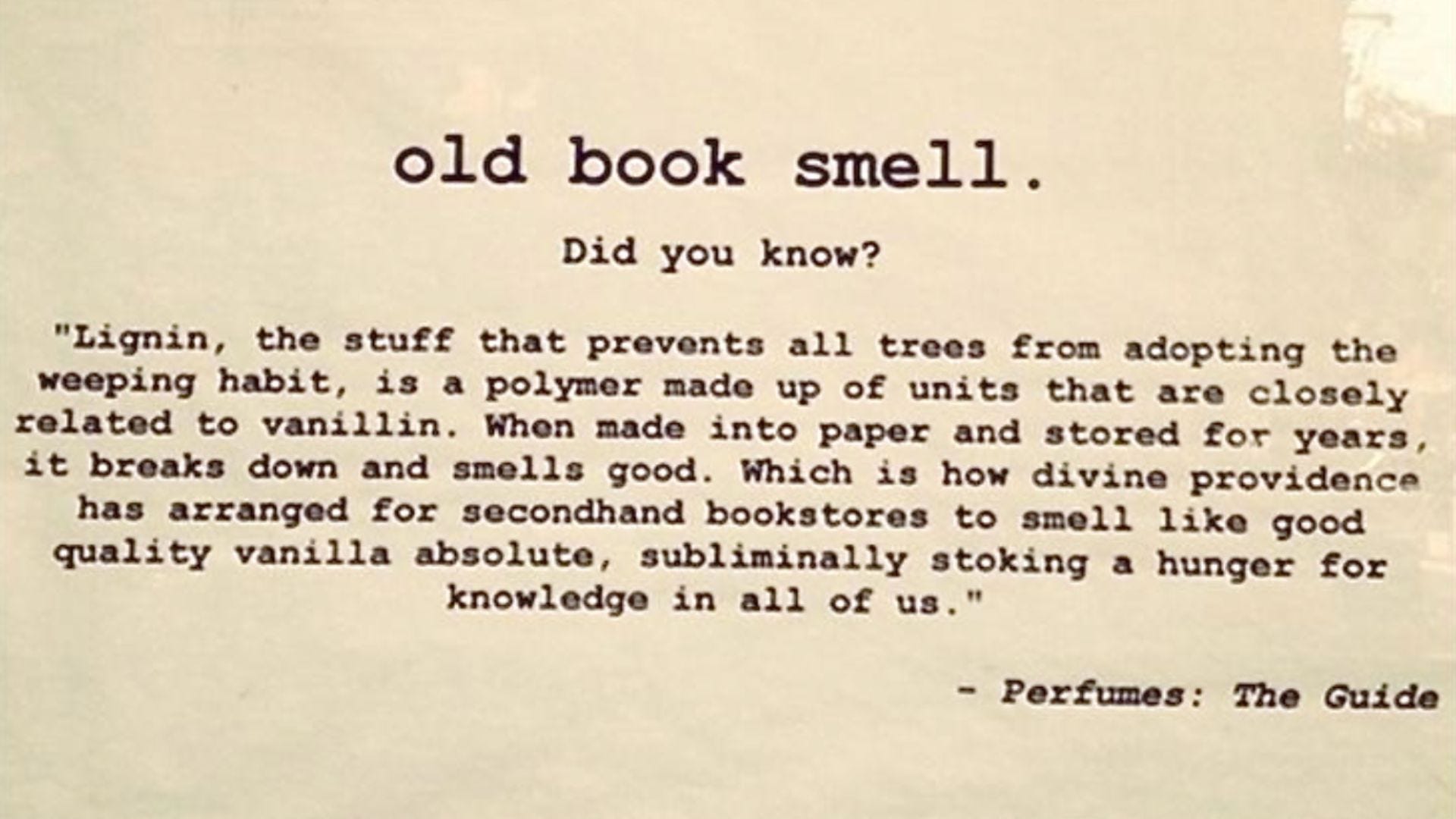
There’s nothing that I love more than the smell of old books - even better is a library full of them! Those places are becoming more rare these days. I know my library here doesn’t have the old, musty smell of aging books that my hometown library did back in the 1980’s. So sad.
I do have a few prized possessions at home, one of which dates back to 1864.
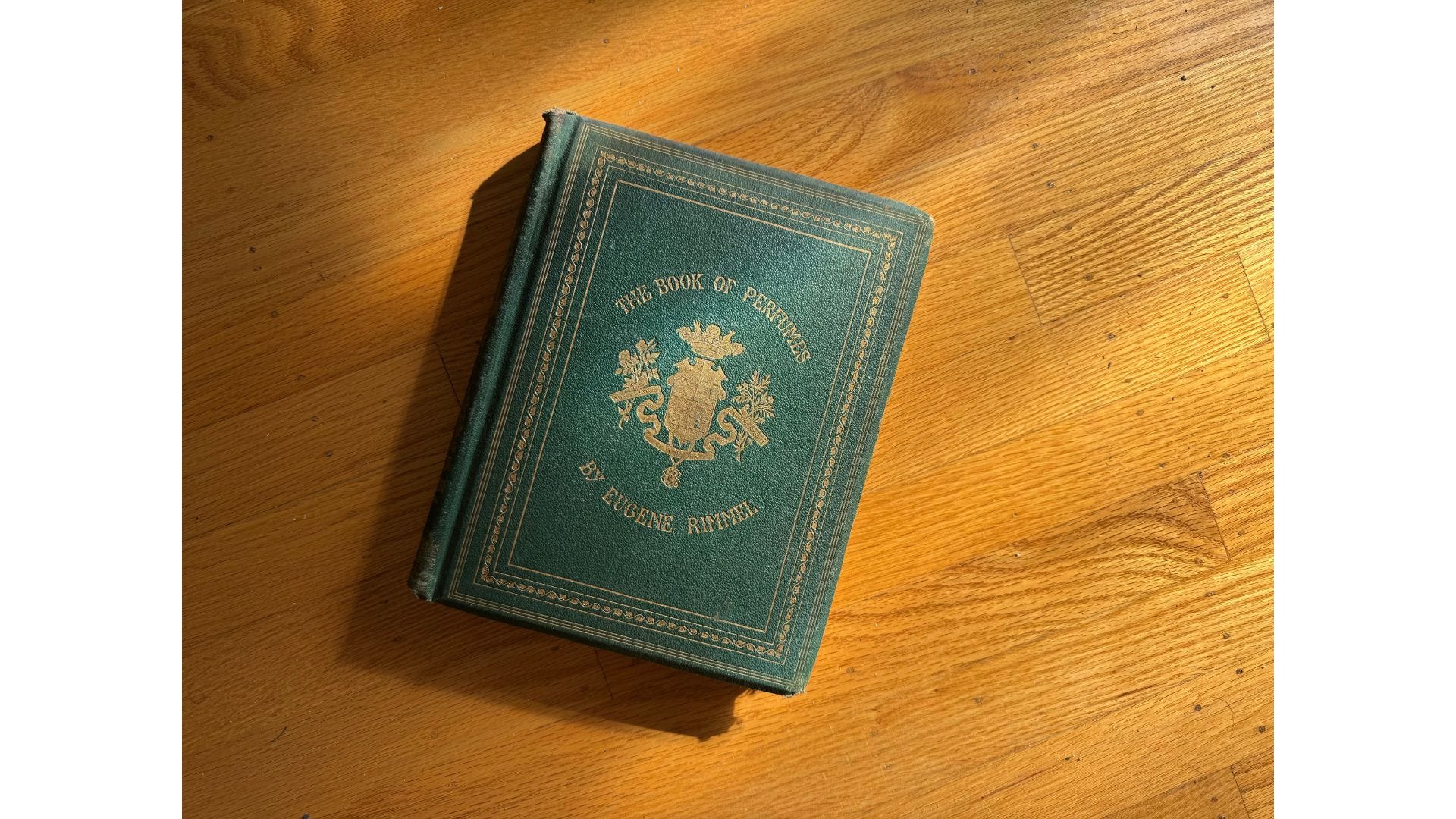
“The Book of Perfumes” (first edition) by British Perfumer Eugene Rimmel oozes a rich, musty, woody smell. I handle her with great care because the pages are quite brittle, but they smell so beautifully of the past.
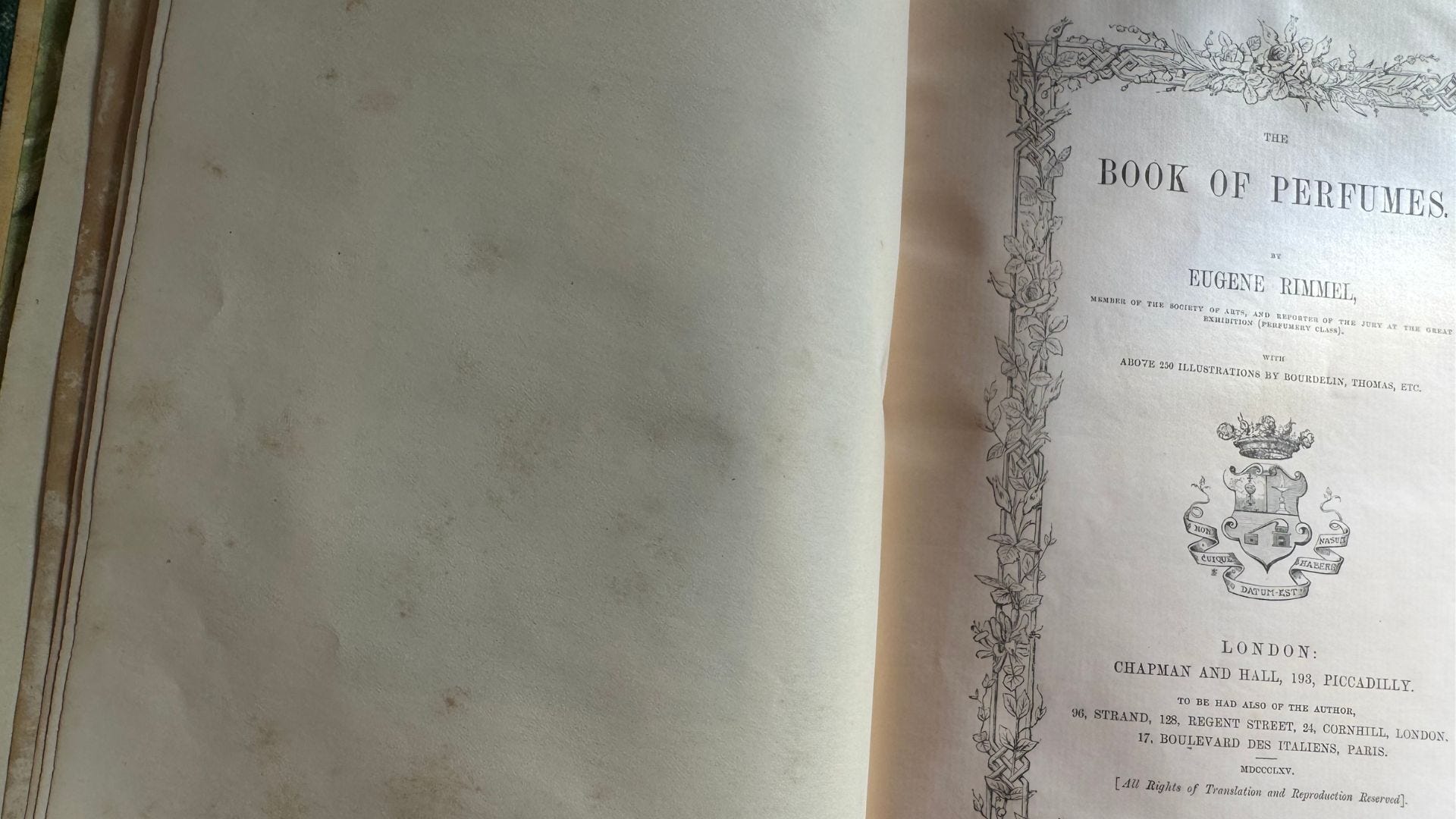
I imagine the travels the book has experienced from its origin in Hertford, England to my home in San Francisco, California. How many hands have gripped the book and turned the pages inside? Where were they sitting? What were they wearing? What might they have been drinking while reading? Were they wearing perfume or did they smoke a pipe by chance?
The smells can provide some clues…
The green cloth cover, commonly stiffened with starch, and decorated with gold tooling in those days smells dusty, salty (cracker-like), buttery, dense, matte, hugging, purring, slightly humid, and very serene. Clearly many hands have connected with this book.
Inside, the yellowed-pages smell dry, woody (pencil-shaving), scratchy, square, a little hazy with moments of brightness peaking through. A scent that almost whispers, inviting you to come closer.
The printed ink gives off a metallic coolness, offset by some sour notes that jump off the page.
Without even reading a single word on the page, the smell of the book lets me know that what’s written is based on ideas from long ago. Smell gives me greater context and nuance which helps inform what I’ll read.
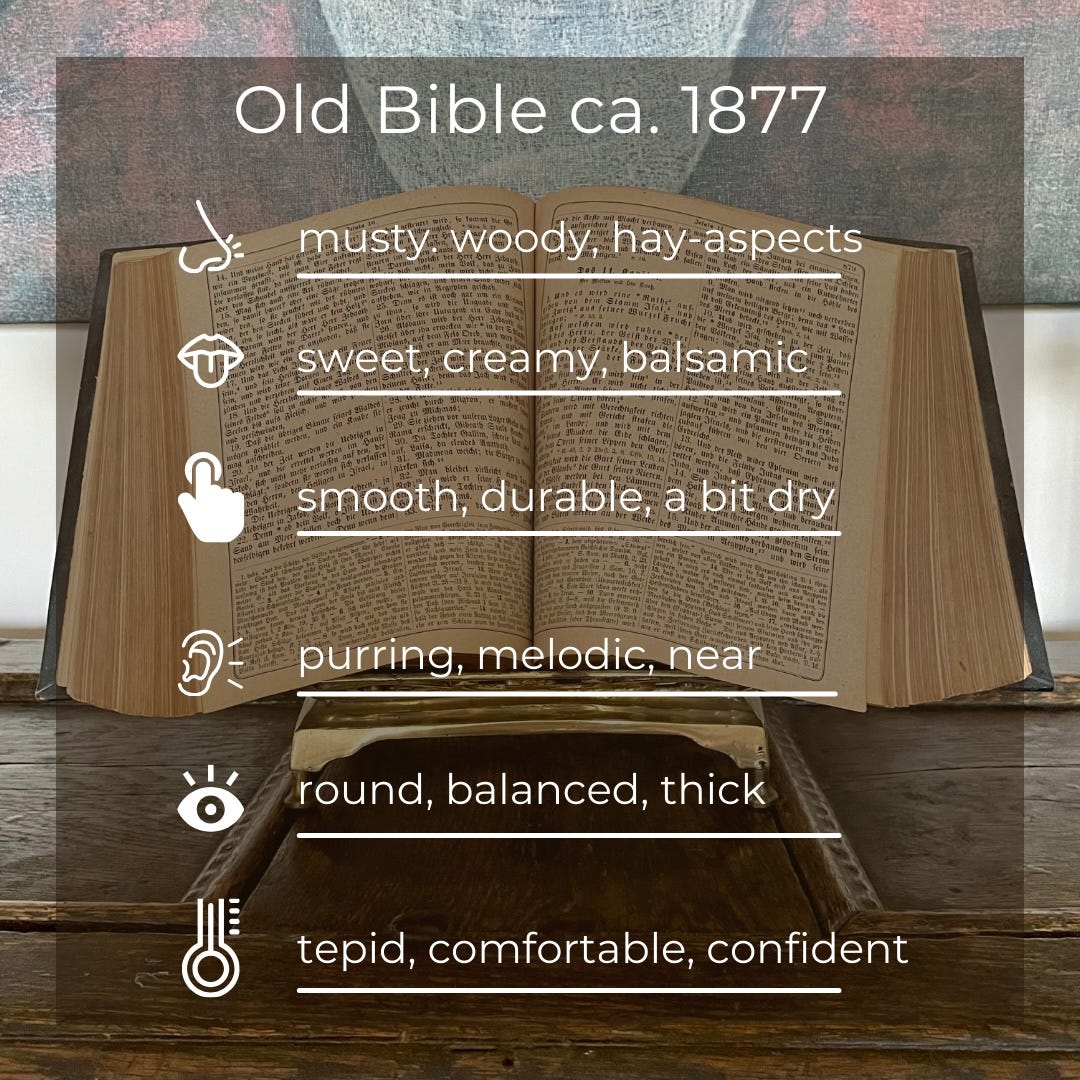
Another example is an old bible from 1877, which I smelled at my mother’s house. Here is how I would describe its smell:
SPACES: OLD PLACES
There are other interesting ways to smell the past here and now, and that’s by going to historical places. A few years back I went to Aston Hall, a 17th Century mansion near Birmingham England. It’s said to be one of the most haunted buildings in the UK, with ghost stories dating back to its inception. There were over 30 rooms to explore, with a rich history of King Charles I and Queen Victoria having stayed there.
My favorite room was the Long Gallery, pictured here, because the smell of history was so vivid.
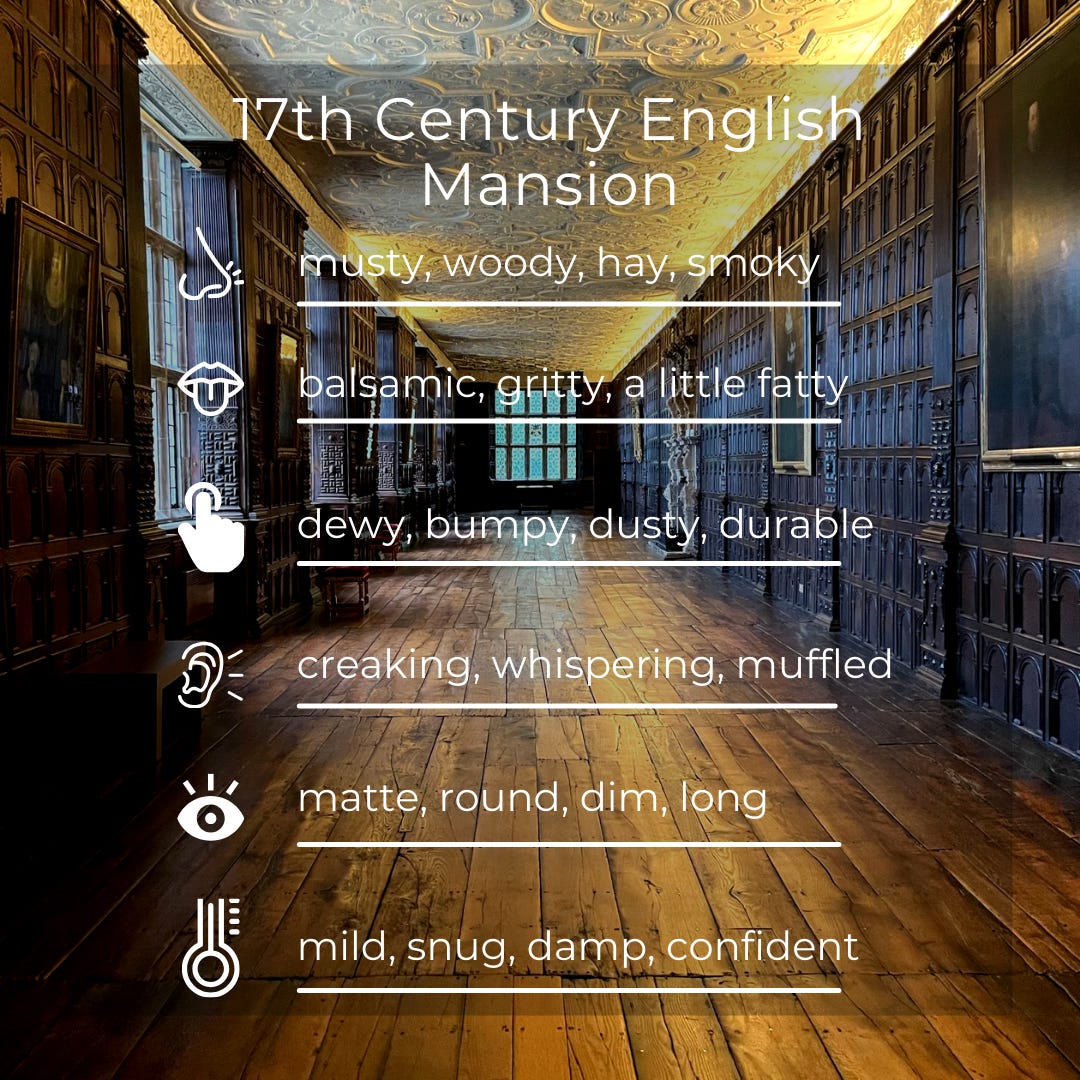
I imagine the parties that took place, the quiet moments spent sitting in reflection, and the meals that might have been shared. The collective smell is an amalgamation of the aged materials, the traveled shoes that have scruffed the floor, and the stains of activities that left their mark.
Being in the space, physically inhaling the air, gives you new insights that simply looking at the picture or reading about the place can’t fully convey. By considering smells alongside other historical evidence, you gain a richer understanding of the past.
PERSONAL: MEMORIES
Of course, the most impactful way we can smell the past is through a personal connection. Whether that’s an object, a person, or a place, having access to these allows us to delve into powerful scent memories.
I invite you to read the Scent*Tattoo of a woman who returned to her old 1898 family home in East Texas to discover the rich smell of mothballs which sparked a deluge of meaningful connections.
Or another Scent*Tattoo of a man reminiscing about summers spent at his family’s country house in Iran picking orange blossoms to make jam. The scent memory reveals an understanding about traditions passed down through generations.
Something to think about: What are some personal ways you connect with the past? How can you do so using your nose?
This week’s episode of my podcast, An Aromatic Life, is a perfect segue to what I’ve been talking about today - this conversation was a lot of fun!
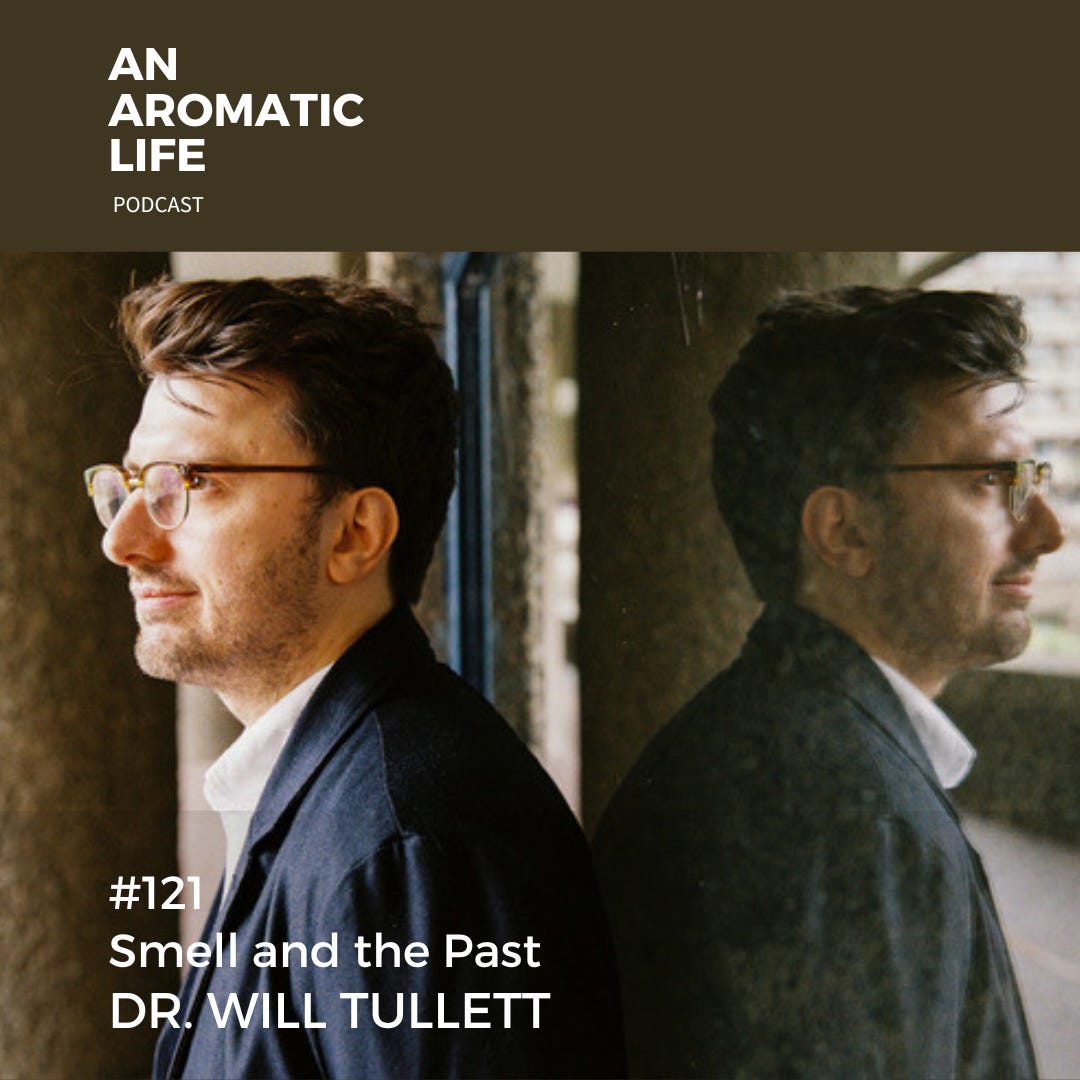
In this episode, I sit down with Dr Will Tullett to discuss the importance of smell in history.
Will shares his personal connection to smell and how it has shaped his research. He also talks about the Odeuropa project, which aims to explore the smells that have mattered in European history.
He emphasizes the need to engage with our sense of smell in historical research and challenges the misconception that the past must have smelled terrible. He also emphasizes the need to preserve smells and describes the challenges of evaluating smells from the past.
Will furthermore explores the relationship between smell and time, highlighting how smells can evoke different layers of time and memories. He talks about the importance of engaging with smells and describing them, as well as reflecting on the role of smell in our own lives.
Overall, the conversation encourages a deeper appreciation and understanding of the power of smell.
You can hear this episode and many more on Apple podcast, Spotify, Amazon Music, or wherever you get your podcasts.
I don’t find photos quite so flat as you do, Frauke. When I look at an image of a place or a person, the smell memories (be they singular or a cocktail) come flooding back….