

Smelling The Beautiful Game
The invisible dimension that's mostly forgotten.

Today is the start of the men’s soccer World Cup, which takes place every four years and, in this go-around, is being hosted by Canada, USA, and Mexico. The sporting event is arguably the largest in the world, with a projected 6 billion global engagements across TV, streaming, and digital platforms. For reference and scale, the last final held in Qatar drew 1.42 billion viewers (that’s more than three Super Bowls combined!). So, it’s a big deal and, for the first time, there are going to be over 48 countries represented. Chances are you’ll experience the hype whether you like it or not.
Now, why would someone who writes about the sense of smell even care about this? It’s a sporting event, big deal. There’s already enough being written about the subject. (incl. the rampant corruption surrounding FIFA and U.S. politics) so what could I possibly add?
Well, for me it’s personal. I’m a huge soccer fan. I’ve been engrossed in the game for years now, firstly through my husband’s deep devotion to Manchester United (which rubbed off on the rest of the family), but also because both of our boys played competitively for years. Soccer has been a constant in my life and I truly believe it’s the beautiful game.
Not for the usual reasons, but for something that has nothing to do with how it’s played: it’s the community, connection, and belonging it creates across language, culture, and borders. Wherever we traveled, the boys kicked a ball with the local kids and it didn’t matter that they spoke a different language because soccer was the language - they always felt a connection.
So, I’ve been thinking a lot about what nobody else is writing about: the smell of the game.
Soccer is saturated with smells - some deliberate, most invisible. The sport has an entire sensory dimension that nobody talks about because we don’t have the language or the cultural habit of noticing smells. But it’s there, so let’s sniff around.
THE SMELL OF PREPARATION

Let’s begin with the pitch (that’s a field for those not familiar) because without it there is no game. FIFA mandates natural grass for all World Cup matches, and interestingly the type used is quite nuanced across the 16 stadiums depending on climate. In cooler cities like Toronto and Seattle they use Kentucky bluegrass and perennial ryegrass, while in hotter cities like Miami and Guadalajara they use Bermuda grass. With the anticipation of play, you can detect the most subtle scent of cis-3-hexenal (crushed leaf smell) hovering in the air as the grounds crew readies for the game. That’s because we humans are incredibly sensitive to this compound, and are able to detect it at a concentration of just 0.25 parts per billion.
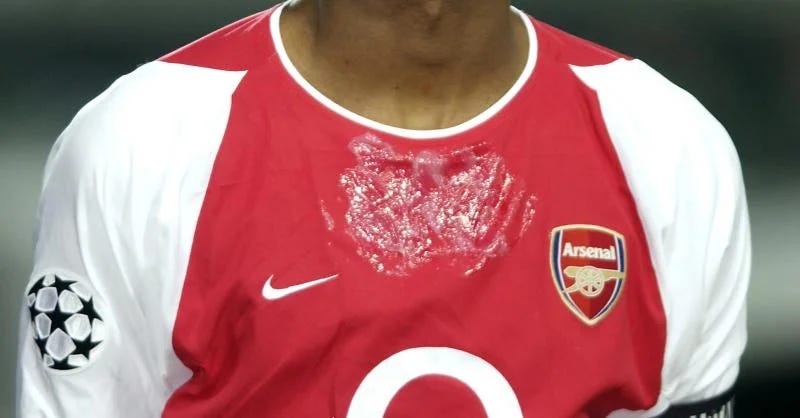
Then there’s the players’ pregame ritual of using Vicks VapoRub ™ on their chest or shirt. Famously popularized by Patrick Vieira (France), it’s now ritualistically applied by many present-day players, including Vinícius Júnior (Brazil). While science says the benefits are largely placebo, the strong camphorous, menthol, eucalyptus scent does help clear nasal congestion and stimulate sensory receptors which tricks the brain into feeling like breathing is easier and deeper during high-intensity running.
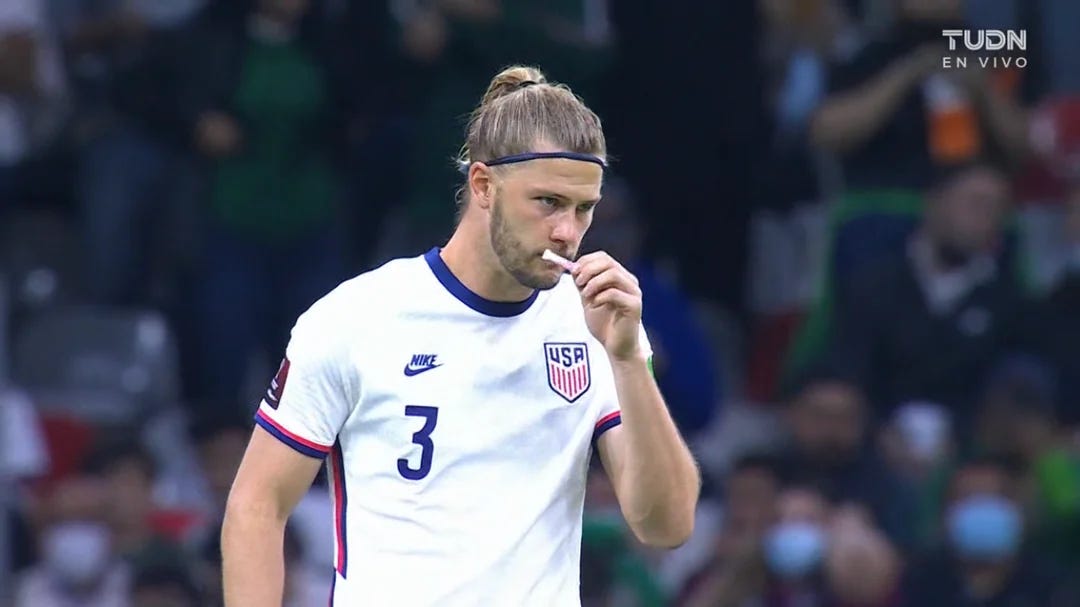
And let’s not forget the smelling salts. Inhaling this strong, sharp, pungent ammonia odor is becoming very popular among soccer players before the game (you can spot players taking a big whiff in the tunnel before they walk out). Sniffing triggers an involuntary reflex that spikes adrenaline, and your heart rate, with the benefit of instantly giving a short-lived burst of mental sharpness and focus.
“Sports have so much to do with smells. I think of the smell of the grass when you arrive at a football match. The sweat on the field and the atmosphere in the stadium. These are all very intense smells.” ~ German National Team player Lukas Podolski.
THE SMELL OF PLAY
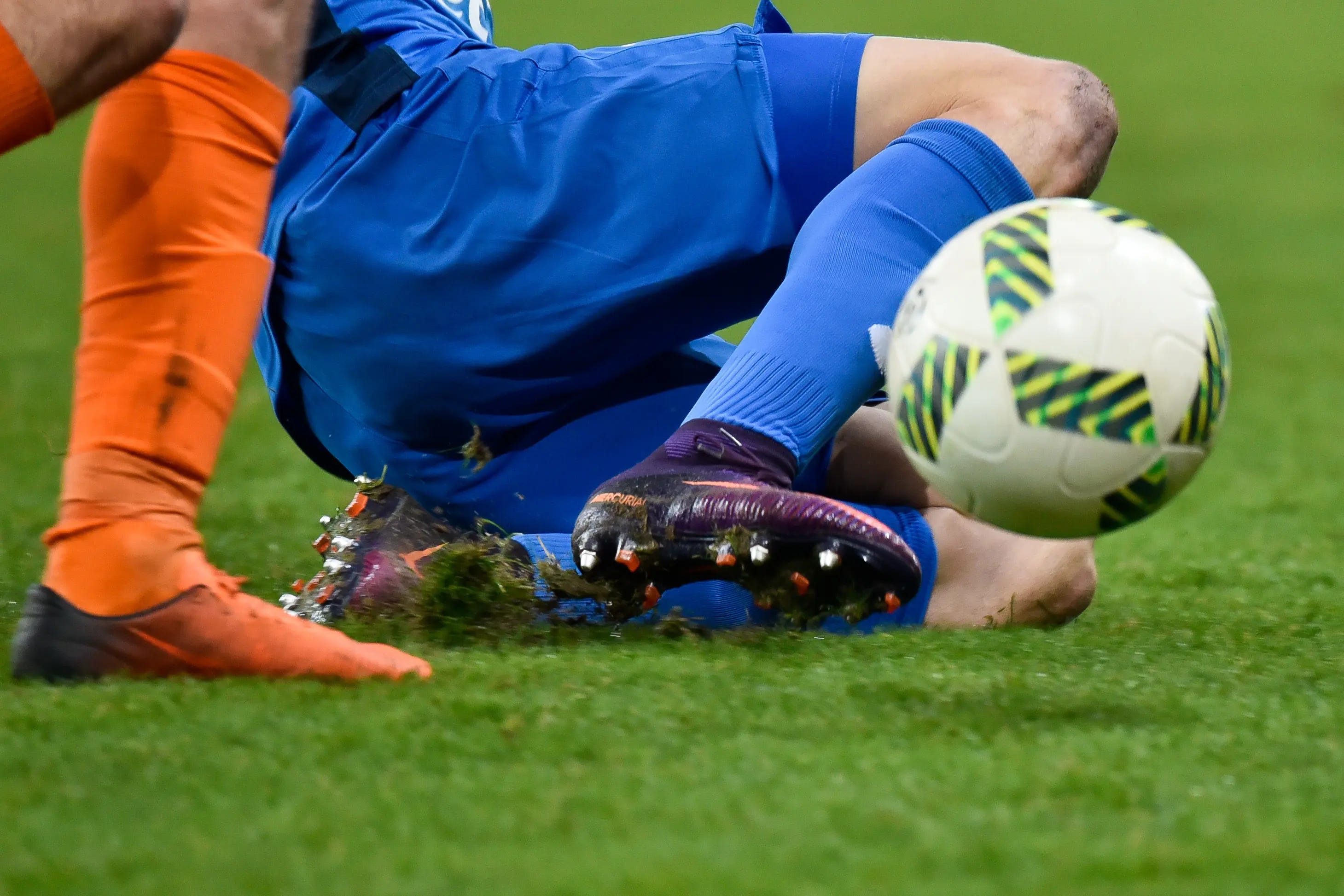
Once the whistle blows, the pitch comes alive with a crescendo of distress signals - every step, every slide tackle, every sprint releases shouts of green leaf volatiles. But depending on where you are, the olfactory impressions can vary: in cooler places Kentucky bluegrass and perennial ryegrass release a sweet, traditional, cleanly “green” scent, while in warmer places Bermuda grass produces a pungent, sharp, earthy, and distinctly herbal scent.

Up in the stands, crowds of tightly packed bodies release their own collective stress signal: the unified groan when a shot goes wide, the held breath before a penalty, the eruption when a goal goes in. Imagine 80,000+ people on their feet, arms up, mouths open, screaming. What a cacophony of smells! Clearly we’re not just watching the game, but we’re also breathing it in.
The exact smell is hard to describe. It’s more of a feeling in your body. Even if you’ve never been to a soccer game, I would compare it to going to a concert. That “collective effervescence”, the emotional energy that emerges when people have a shared experience. THAT has a unique smell that’s hard to pinpoint, but you know it when you’re in it because your senses are totally alive.
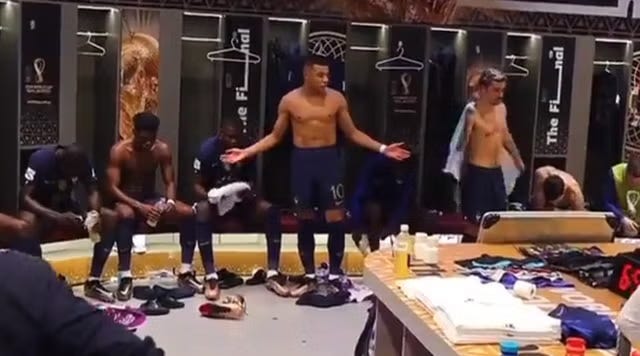
Maybe the most olfactory dense moment is at halftime in the locker room, when smells are particularly “ripe”. 15-20 bodies in a humid space that quickly fills with the odors of sweat-soaked synthetic uniforms and foam shin guards, grass-stained cleats, and lots of heavy breathing. While I couldn’t find an exact quote, several sources described the smell as “overwhelming.” Seems about right.
One Japanese pharmaceutical company, Rohto, actually decided to pay attention to smell. In 2019 they partnered with soccer club Iwaki FC and diffused a custom green scent called Restful Green in the locker room before and after matches, and gave each player a personal diffuser to use at halftime. Results showed reduced tension and anxiety, and player Naoki Maeda said the scent switched him into game mode even when tired. It’s a small experiment with one club, but it does make you wonder why it isn’t more prevalent.
THE SMELL OF VICTORY AND DEFEAT


Having gone to enough games now, I feel there’s also an olfactory experience at the final whistle. To me, winning smells loud, bright, deep, wide, and strong: armpits raised, mouths open, bodies turned inside out with pure elation. It’s totally visceral. And losing has another smell. It’s not the absence of smell so much as it’s a sudden softness. The adrenaline drops, the salty tears come out, only to be buried in shirts and scarves.
As the stadium empties and the energy drops, what’s left behind is the smell of spilled beer and discarded food. The stadium quiets and the air becomes stale. What we take with us are memories, including olfactory memories.
Soccer creates a shared sensory experience. You step into a stadium anywhere in the world and it smells more or less the same. The grass releases the same signature green, crushed leaf scent. The exuberant crowd smells the same. The menthol cloud in the tunnel before kickoff is the same.
It turns out that these aren’t just soccer smells. They’re a shared human olfactory language that doesn’t require translation. The collective sensory experience speaks for itself, and is stored in the body and mind.
That’s the beautiful game - smells have been there the whole time. We just forget to notice.
References:
FIFA projects 6 billion viewers for the 2026 World Cup: it will be the most-watched event in history. https://www.merca20.com/fifa-projects-6-billion-viewers-for-the-2026-world-cup-it-will-be-the-most-watched-event-in-history/
What Kind of Grass Do I Have? Complete Visual Identification Guide (2026)
https://whatgrassisthis.com/blog/what-kind-of-grass-do-i-have-visual-identification-guide
Wikipedia: Smell of Freshly Cut Grass. https://en.wikipedia.org/wiki/Smell_of_freshly_cut_grass
Eccles, Ronald. (2003). Menthol: Effects on nasal sensation of airflow and the drive to breathe. Current allergy and asthma reports. 3. 210-4. 10.1007/s11882-003-0041-6.
Do smelling salts help Everton players breathe or is it just the latest fad? https://www.nytimes.com/athletic/2503374/2021/04/08/do-smelling-salts-help-everton-players-breathe-or-is-it-just-the-latest-fad/
The Smell of the Game: Lukas Podolski on Fragrance, Football, and the Thrill of Victory, https://2787perfumes.com/blogs/in-the-know/in-conversation-with-world-champion-and-fragrance-enthusiast-lukas-podolski
Pizarro, José J et al. “Emotional processes, collective behavior, and social movements: A meta-analytic review of collective effervescence outcomes during collective gatherings and demonstrations.” Frontiers in psychology vol. 13 974683. 31 Aug. 2022, doi:10.3389/fpsyg.2022.974683
Rohto Pharmaceutical Co., Ltd. / BÉLAIR LAB × Iwaki FC. (August 2020). New green scent effective at reducing mental fatigue and anxiety, latest soccer game study shows. Press release.
The smelling salts surprised me. That's a real adrenaline spike, and players have made it a pregame ritual. The Rohto study stuck with me too, using a calming green scent at halftime to bring the tension down. I'd want to know why more clubs haven't tried it.
This is awesome. I liked imagining how these observations would apply to a basketball/Knicks victory!!!✌️