

Book Spotlight: Orwell’s Nose
What I’m reading right now.
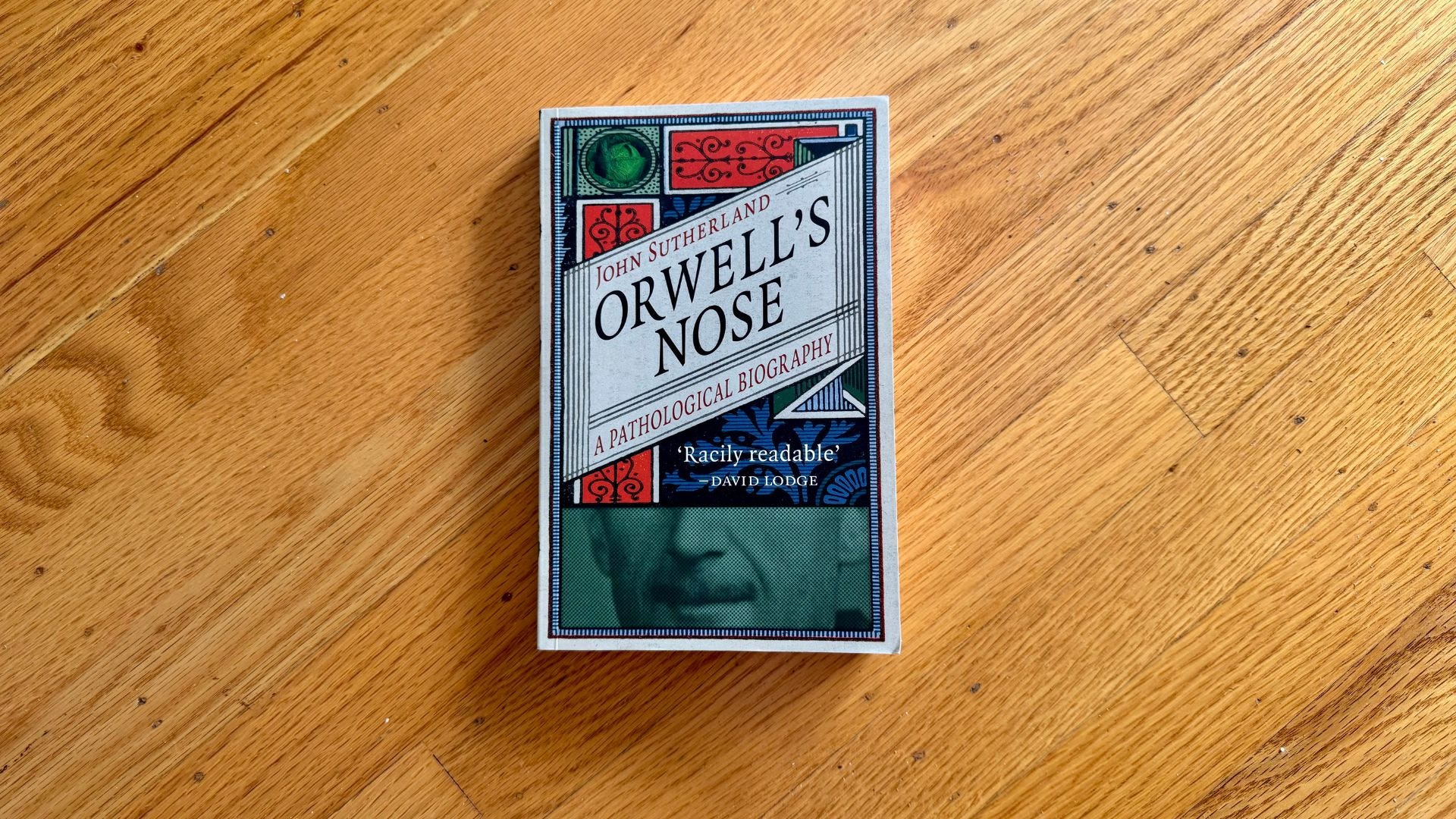
This month I want to spotlight another olfactory read that I think you might find interesting. It’s an intriguing work by John Sutherland called “Orwell’s Nose: A Pathological Biography.”
While the book is an author’s perspective on George Orwell’s life and works (most famously 1984), what makes the storytelling unique is the focus on showcasing how absolutely obsessed Orwell was with smell!
The author, John Sutherland, came to this realization when he, himself, permanently lost his sense of smell right around the time he was rereading Orwell's writings. So, it seems Sutherland's anosmia gave him a whole new perspective that he hadn’t considered before.
I thought that was a fascinating concept - to write about someone else’s writings that you’ve known for years, and are now revisiting with a fresh perspective based on this new lived experience sans smell.
What became perfectly clear was how finely attuned Orwell was to smell, with vivid descriptions of odors, good and bad, permeating his writings. Take this passage, for example, from his 1938 novel Coming up for Air:
“How I could smell it! You know the smell churches have, a peculiar, dank, dusty, decaying, sweetish sort of smell. There’s a touch of candle-grease in it, and perhaps a whiff of incense and a suspicion of mice, and on Sunday mornings it’s a bit overlaid by yellow soap and serge dresses, but predominantly it’s that sweet, dusty, musty smell that’s like the smell of death and life mixed up together. It’s powdered corpses, really.”
Or this vivid olfactory description from his uber-famous novel 1984, where a neighbor asks the main character, Winston Smith, to unplug a sink:
“There was the usual boiled-cabbage smell, common to the whole building, but it was shot through by a sharper reek of sweat, which - one knew this at the first sniff, though it was hard to say how - was the sweat of some person not present at the moment.”
The whole book oozes with smell references, which I won’t get into here. The book really is worth a read if you like olfactory-rich writing, which seems rarer to me these days.
One interesting tidbit at the end of the book was learning that Orwell was a chain smoker, having taken up the habit at an early age. Apparently, Orwell was never not seen with a cigarette in his mouth, and spent hours puffing away as he wrote.
That insight is fascinating to me because it’s been well studied that smoking stunts your ability to smell well. The fact that Orwell was nevertheless keenly attuned to smells around him and made vivid, frequent mentions of odors in his writings, tells me that it’s all about where you put your attention. In fact, I knew a few perfumers who were heavy smokers and they created some of the most interesting perfumes on the market. Go figure.
Reflecting on this book, it did made me wonder a few things…
How do Orwell’s works “read” to a person who’s never known what smells are? I need to check in with my congenitally anosmic friends.
And what would it have been like to sit in a London cafe with Orwell for hours talking about everyday olfactory experiences? Dreamy, I imagine.
I think Orwell would have been a good friend. One to talk about everyday olfactory experiences with. What about you? Would you have enjoyed a conversation with him?
This week on my podcast An Aromatic Life:
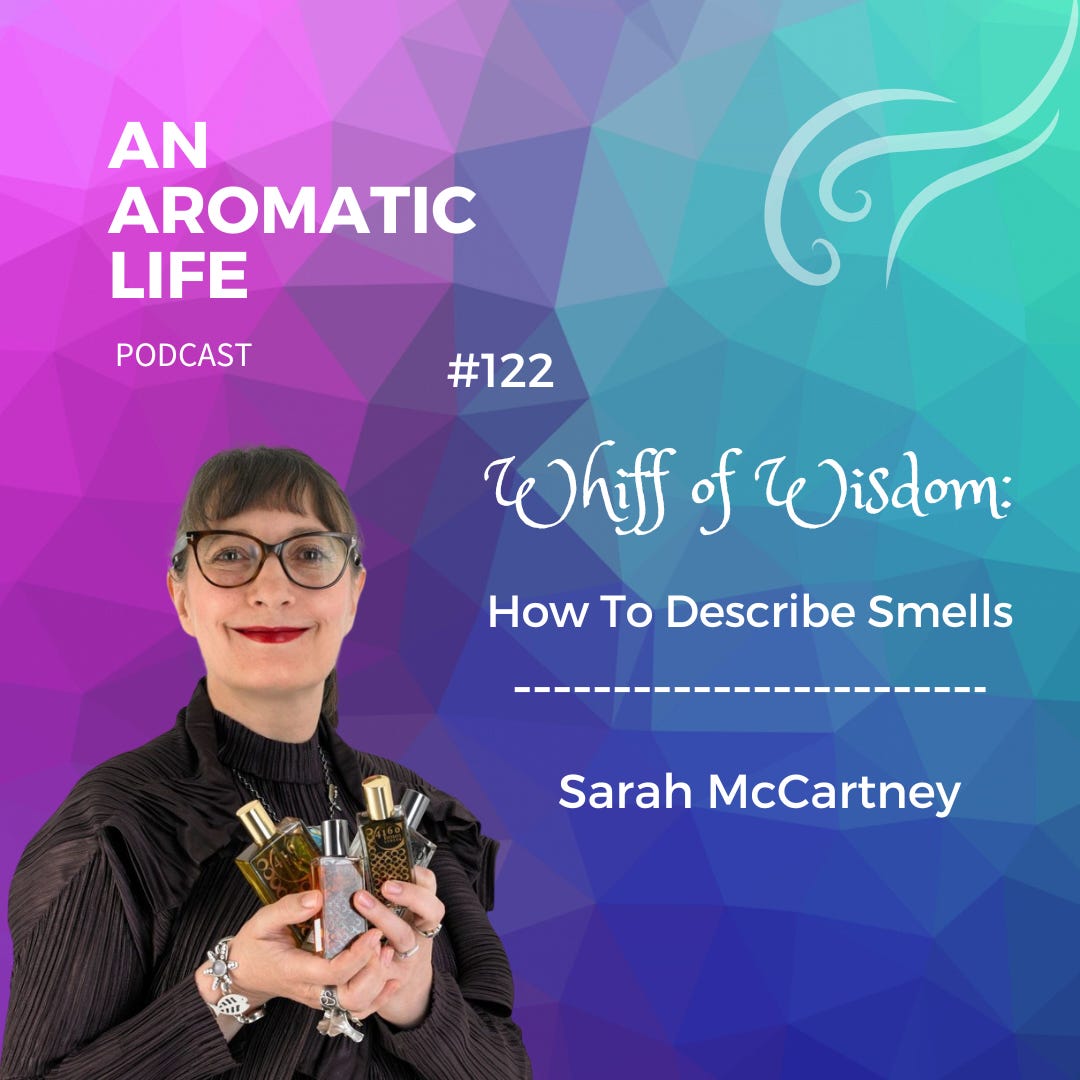
This week's whiff of wisdom comes from Perfumer Sarah McCartney shares her tips on how to describe smells. You’ll find it’s easier than you think, with a little practice.
To listen to the original full episode go to episode #66.
You can listen to this episode, and many more, on Apple podcast, Spotify, or wherever you get your podcasts. Go here.
“The Children’s Book That Meets The Moment”

If you have children ages 3-5 years old in your life, this book animates them to become stewards of the plants, passionate ambassadors for the natural world, and active smellers.
The hardcover, paperback, and e-book are available for purchase globally on Amazon, Walmart, and Barnes & Noble.