

Why We Fear Smelling
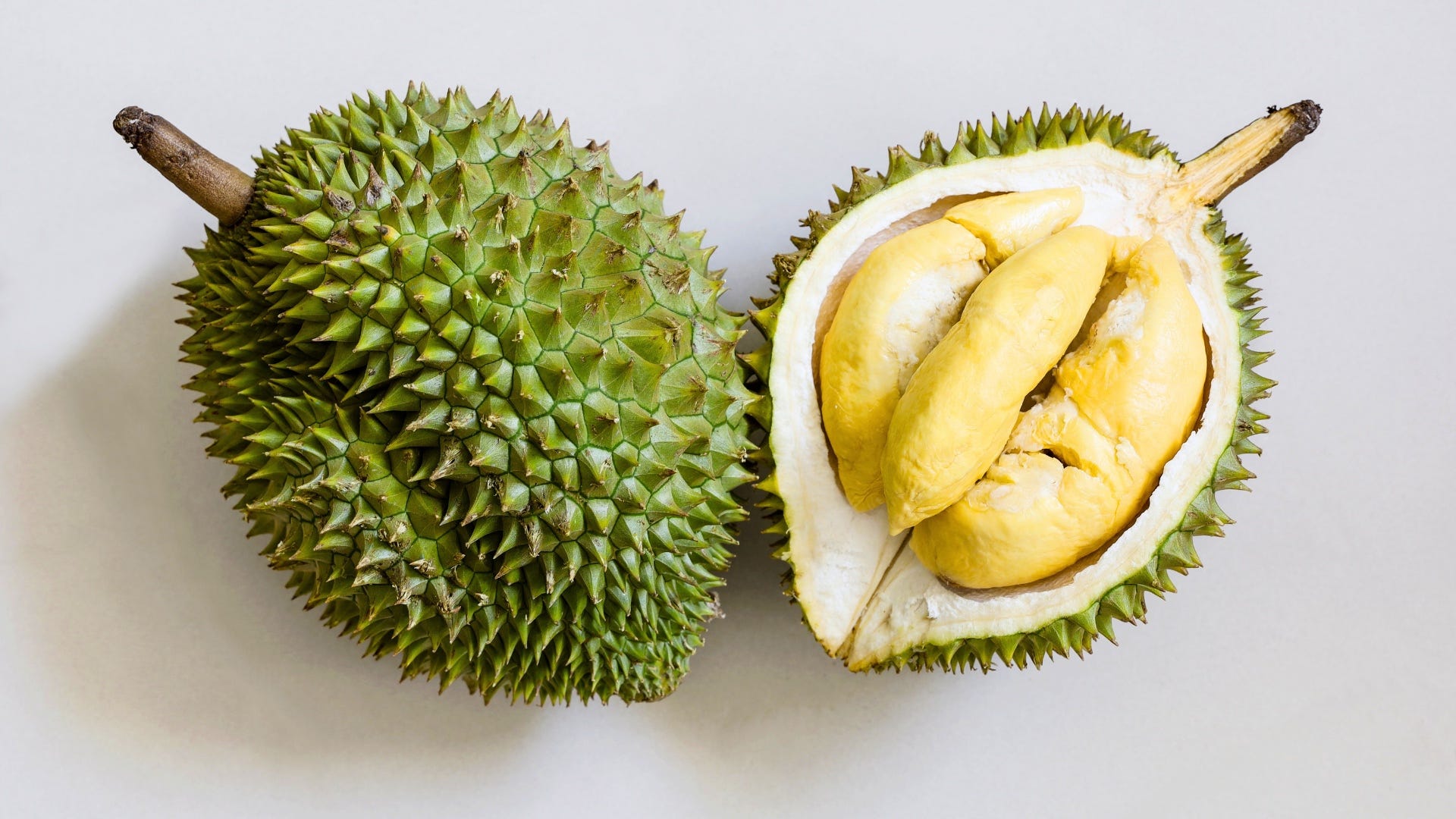
The other day I was out for a walk with my 23-year old son and I came across an interesting aromatic plant, of which I handed him a little piece to smell. His first instinct was to look at me funny and recoil with annoyance. “Why do I need to smell this? That’s weird,” he said. I could see in his expression a sense of discomfort and angst about what he might discover.
That response wasn’t new to me. In fact, in my experience, it’s the norm. I’m always trying to get people around me to connect with smelling, encouraging them to smell this, put their nose in that. In almost every case, the response is trepidation and dread.
Now, you might be reading this and thinking, “I don’t fear smelling. I love to smell!” Well, that might be true for you, but hear me out on this one because I’ve observed this long enough now, and believe it’s worth exploring further.
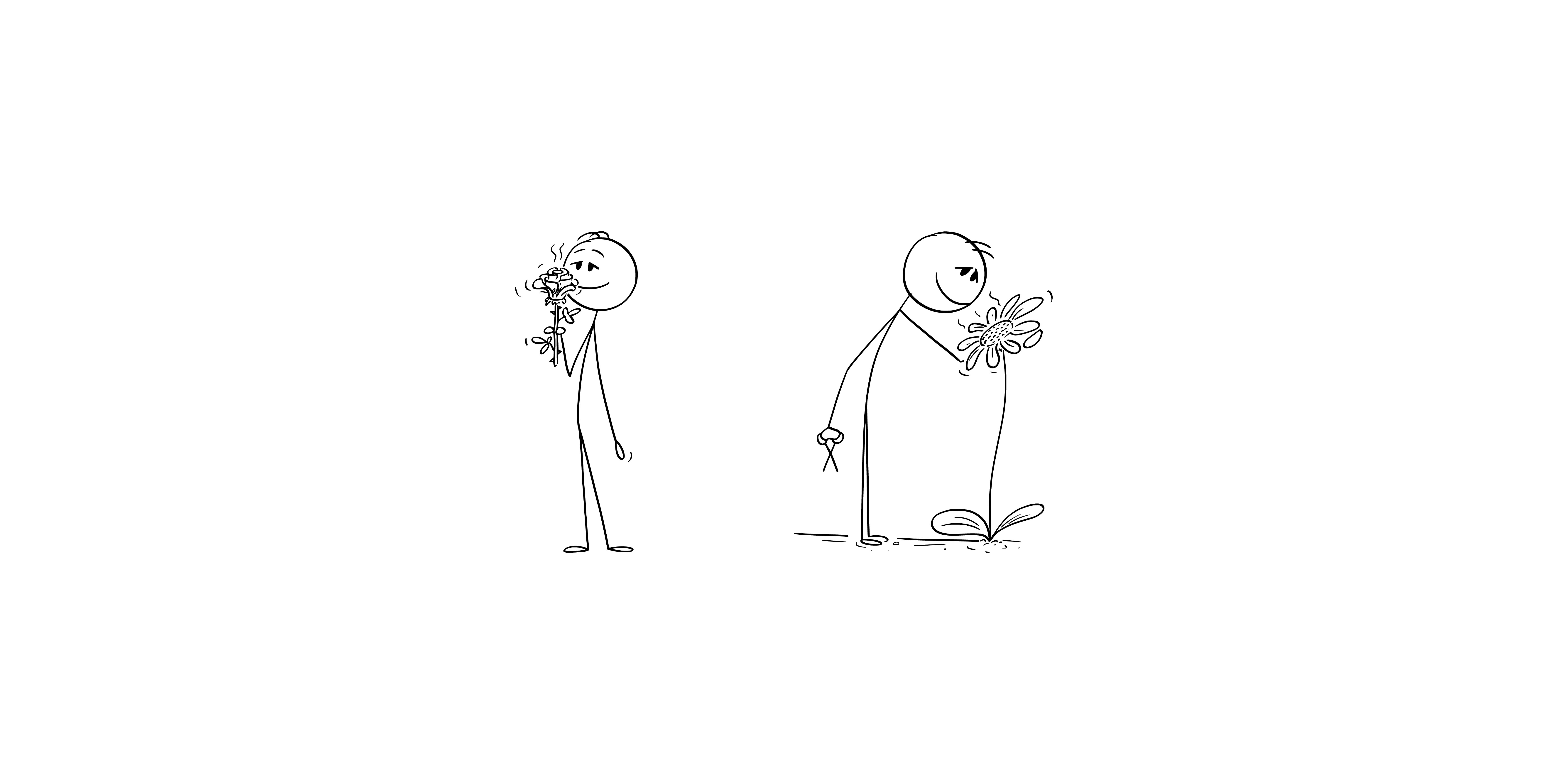
Smelling something is a visceral, embodied experience. The act is a chemical and material exchange of matter. Molecules from the outside world enter you, get recorded, only to be interpreted by your brain and then, in turn, acted upon by your body.
And, so, because we smell the world around us constantly, with every breath, we’re having an emotional response to what we experience. Most, if not all of this, is unconscious.
This is where fear comes in.
Our brains are designed for the negative. Psychologists Paul Rozin and Edward Poyzman coined the term “negative bias” to suggest that we humans are wired to focus our attention, and use negative information, far more than positive information, to make sense of the world.
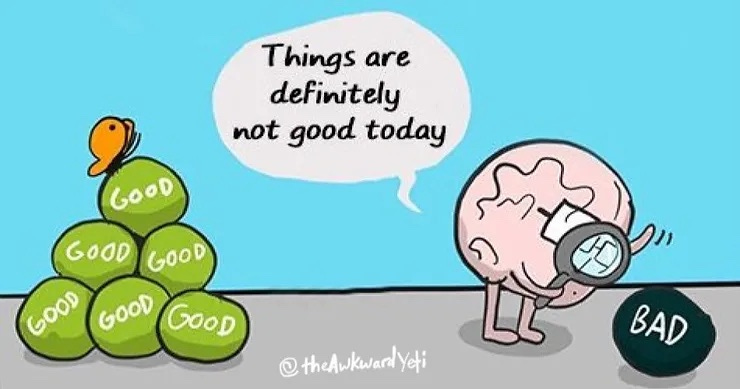
The bias is argued to serve critical evolutionary adaptive functions. Be aware of the bear around the corner that might eat you at any moment! It’s about survival. And our sense of smell is a leading actor in this realm.
You see, this bias allows us to, first and foremost, stay aware of potential everyday dangers like fire, gas leaks, and spoiled food. If you’ve heard of the term olfactory adaptation you know that our sense of smell is wired to “shut off” the smelly noises we are continuously bombarded with throughout the day. The olfactory system shuts off after 15 minutes to ensure we stay alert for any dangers (and don’t lose our mind).
If you reflect for yourself, you might observe that your nose is, more often than not, looking for the bad smells rather than the good. In fact, it’s the reason I believe we’re so focused on sanitizing ourselves and our environment. But that’s a discussion for another day.
My friend Dia Kline, who lives with congenital anosmia, hasn’t smelled a day in her life. She observed it best when she told me on An Aromatic Life:
“From my perspective, listening to a world of people who smell, I perceive smell to be an annoyance. Most of the comments that I hear are in relation to that stinks, that's awful, ew, gross, what's that? I rarely hear people say, oh that smells so good. So for me, my perception of smell is just annoyance. I don't understand why people are obsessed with it because it's just, everyone is so angered and annoyed and determined. Maybe that's the world quest, to eliminate the bad smells.”
Which leads me to what’s really going on with the fear of smelling… Dr. Harriet Lerner, in her book The Dance of Fear, writes:
“It is not fear that stops you from doing the brave and true thing in your daily life. Rather, the problem is avoidance. You want to feel comfortable, so you avoid doing and saying the thing that will evoke fear and other difficult emotions. Avoidance will make you feel less vulnerable in the short run, but it will never make you less afraid.”
It’s the action that arises from the fear of smelling - avoidance. Let’s avoid smells so we don’t have to fear them. Brilliant!
I’ll add that the fear of smelling is most likely a result of not being comfortable just sitting in the experience, good or bad. Of course bad smells aren’t comfortable, they’re uncomfortable. They make you cringe, repel, and retract. Nobody likes that feeling.
But what if we made a concerted effort to focus on the positive, and turn that negative bias on its head? What if we became fearless and brave enough to accept what comes our way? To be fully in the experience and learn what it has to offer.
What can the smells around us teach us?
What new understandings can they reveal?
If we take the time to recognize - to really place our attention on - ALL smells, just imagine what new perspectives this opens up for us.
I invite you to embrace the funk, nuzzle the delightful, be brave, and smell everything. Let me know how it goes.
Now where’s that durian fruit I was eating?