

What’s Your Muckefuck?
On the rituals we inherit without noticing.
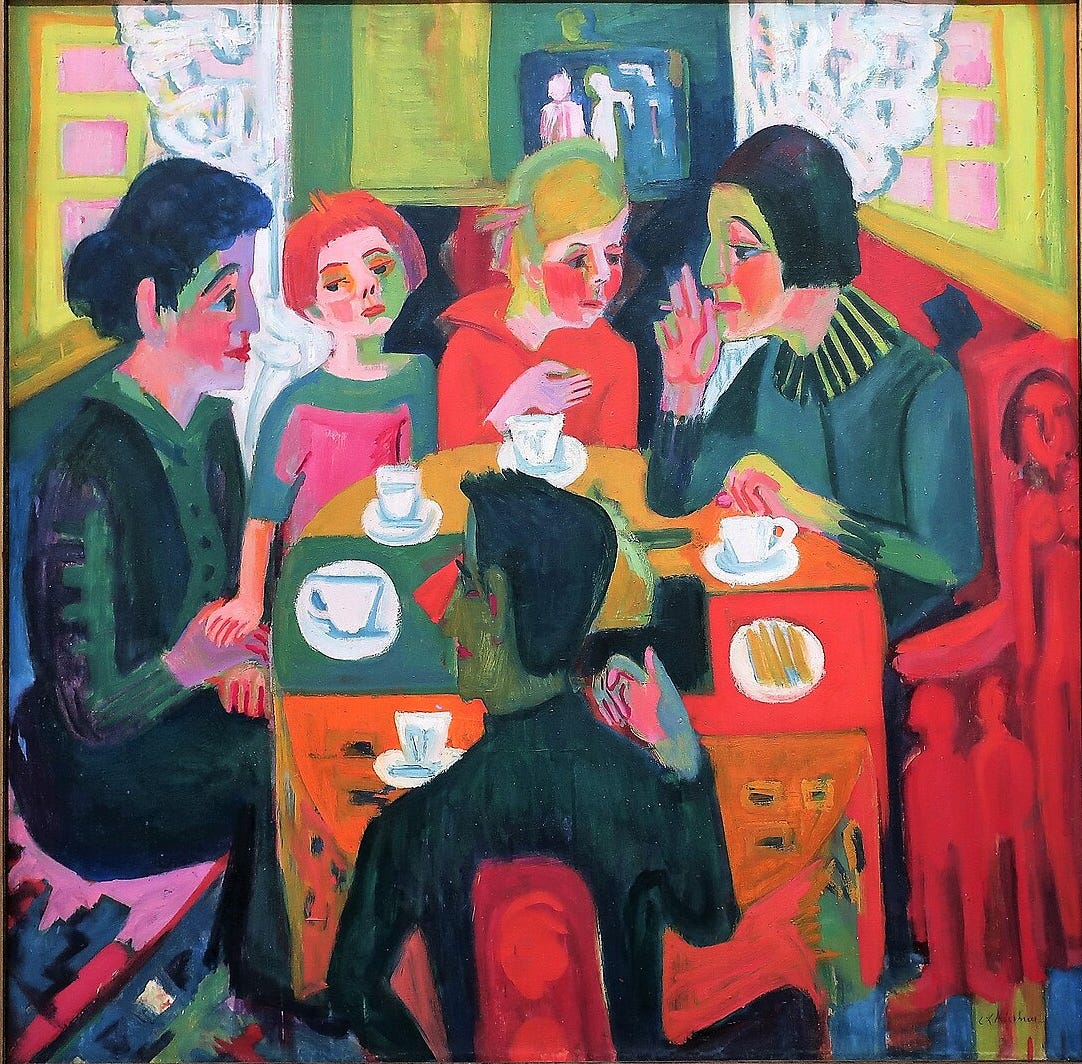

We still have lemons on our tree, which is unusual for this time of year. So I made a lemon cake to go with my afternoon ritual: every day around 3pm, I stop what I’m doing for coffee and something sweet. I’ve done this since college, whether it’s meeting a friend at a cafe or taking a study break alone in my room. Forty years and a lot of jobs and moves later, I still stop at 3pm. Every day.
Then recently I learned about “muckefuck” (pronounced mook-a-fook).
My mother mentioned it to me the other day almost in passing. We were reminiscing about her childhood and she told me casually her mother, my Oma, used to drink something called muckefuck during the war, when real coffee wasn’t available. She thought it was made from chicory, but she wasn’t sure. That was all she knew.
Muckefuck? The name is rumored to come from the French mocca faux, meaning fake mocha. The Germans heard it as muckefuck (mook-a-fook). It’s stuck ever since.
I’d never heard the word before. I’d never heard the story before either.
My grandmother died before I could ask her about it. She lived through two world wars in Hamburg, raised a family, survived bombings, and at some point in all of that, she sat down every day for afternoon coffee, even when there wasn’t any. And she never once mentioned it to me.
I don’t know what muckefuck smelled like to my Oma, whether she hated it, got used to it, or grew to actually like it over time. I only know one thing she said about it. My mother remembers her saying, in German, “how wonderful that we can drink this nice coffee. Back then we only had muckefuck.” That’s it. That’s the whole story I have. One word, one sentence, secondhand through my mother, decades later.
So, of course, I went down a few rabbit holes. What was muckefuck, actually? The most common answer is chicory root, sometimes mixed with roasted barley, rye, or corn, ground down and brewed like coffee. It looks like coffee. But it’s not coffee. People who’ve made it describe the aroma like over-toasted bread crust - dry, bready, malty - with a distinct earthy root quality. And drinking it gives you none of coffee’s bitter taste. There’s no caffeine either, which means no pick-me-up, just the warmth and ritual of drinking something hot that looks like coffee, in the afternoon.
The irony is that Hamburg, of all places, had been a coffee city for centuries before the war took it away from my Oma. The first coffee house there opened in 1677. Within a year, ordinary citizens, clergy, and merchants alike were brewing it at home and inviting friends over to drink it together. A daily pause built into the middle of the day, which would later become known as Kaffee und Kuchen (coffee and cake).
My grandmother kept that respite going during the war with muckefuck. My mother carried the ritual with her when we left Germany for the U.S. And somehow it’s become a part of me, forty years into my own version of the same three o’clock break.
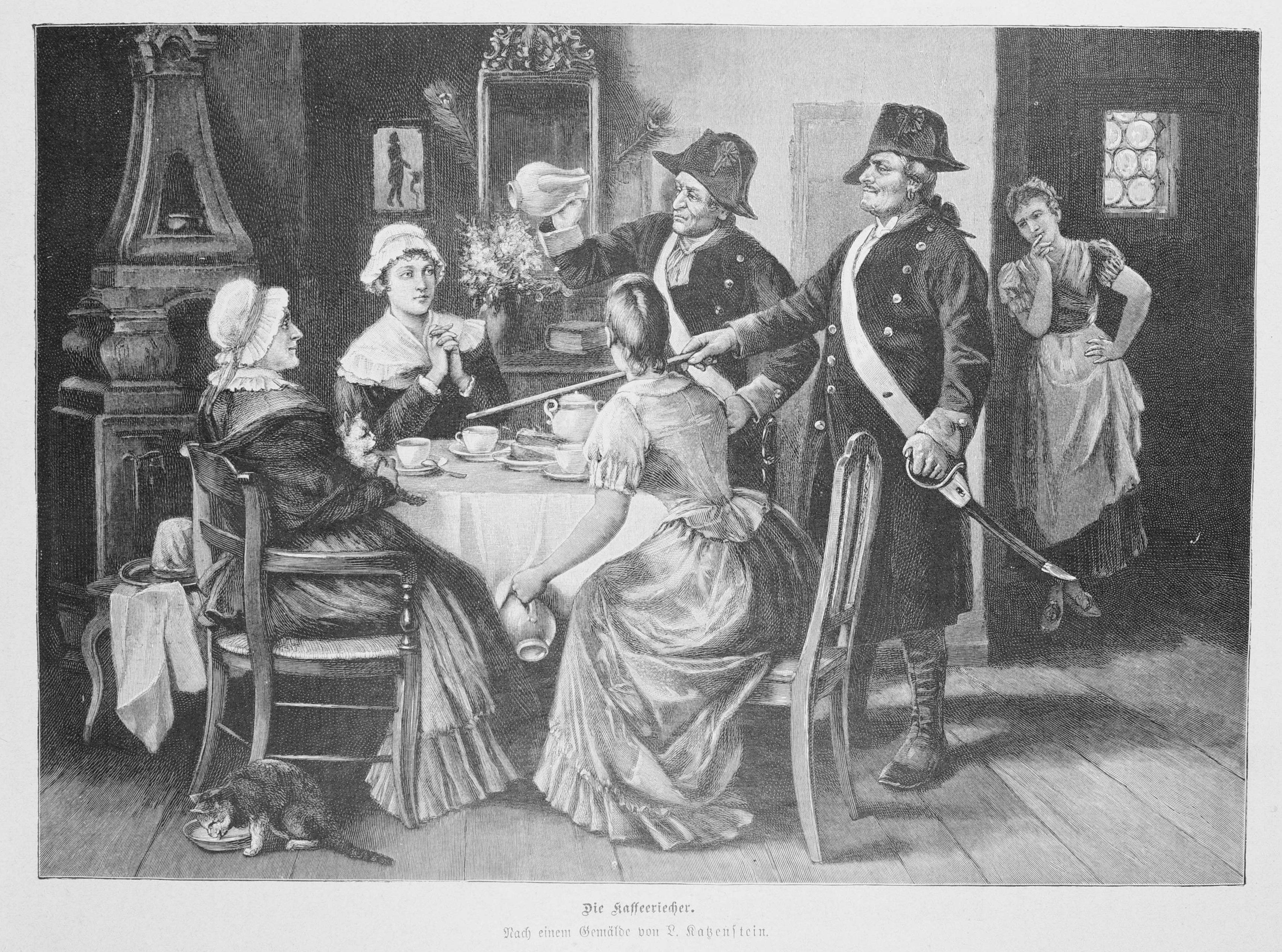
Between 1781 and 1787, by decree of Frederick the Great, a group of around 400 war invalids called Kaffeeriecher or Kaffeeschnüffler (coffee sniffers) were employed to literally sniff out smuggled coffee being roasted or consumed. This was during a period when Prussia imposed a high luxury tax on coffee in order to keep money in the country, and to encourage domestically-produced alternatives such as beer and chicory. Coffee sniffers wore military uniforms, conducted searches on people and houses, were detested by the populace despite being well paid, and received a quarter of any fine as a bounty for each smuggler they caught, so they were highly motivated.
I’m not sure if my Oma knew any of this history. I doubt it crossed her mind while she was brewing chicory root in her kitchen in Hamburg. She wasn’t thinking about Frederick the Great or three centuries of coffee politics. She was just trying to keep Kaffee und Kuchen going, one part of her day that still felt normal, even though nothing else was.
Growing up in the U.S., I learned Kaffee und Kuchen isn’t really a thing here. When I’d invite friends over for it, some would join in, but just as many assumed the cake was meant for after dinner, not the middle of the afternoon. I kept doing it anyway.
I still don’t know much about my Oma’s muckefuck. I know that one word, a single anecdote from my mom, and the fact that she kept having her afternoon coffee anyway, even when it wasn’t really coffee.
That’s the part I think about now when I have my Kaffee und Kuchen ritual at 3pm. While, thankfully, I’m not directly embedded in a war, the world feels tumultuous and fragile. And this small, daily ritual brings normalcy, maybe even a sense of safety, to an otherwise uncertain world.
That leaves me wondering: What’s your muckefuck? That thing you have in your life, something passed down to you, that you keep doing out of habit, that turns out to be one of the steadiest things in your life.
References:
Robilliard G. Novel, popular, fashionable and partisan: making coffeehouses ‘burgherly’ spaces in early modern Hamburg. Urban History. 2024;51(1):146-170. doi:10.1017/S0963926822000311
Coffee Sniffers: https://en.wikipedia.org/wiki/Coffee_sniffers
Identification of Characterizing Aroma Components of Roasted Chicory “Coffee” Brews.
Love this, I'm a total ritual person, particular around food! Yes, Tea and cake weekend afternoons, full cooked breakfast Saturday morning and coffee and croissants Sunday morning, my friends and family are aware! :) its something I have started, so not passed down to me, but hopefully passed onto my kids
Yet another reminder of how similar our roots, are, Frauke!
This is what my great-grandmother used to drink for her afternoon snack:
https://czechmovie.com/products/melta-original-portion-packs-20-x-7g-140g-kavoviny-melta-porcovana-20-x-7g-140g
It's got rye, sugar beet root, barley, chicory root and when boiled it has a dark color. She would add a splash of milk and then take a slice of stale bread (darker type, wheat with some rye) and cut it in small pieces to soak in her "Melta". It was indeed a coffee substitute, and I myself still like to partake on a chicory based hot beverage called Caro. This one is instant, so way easier to make, and I do not dunk bread in it anymore.
And yes, an afternoon tea and a little something sweet to come with it is such a great ritual, to stop and tend to our bodies. Also a great opportunity to have a friend come over, for that brief moment of hot beverage and a little cake, no agenda, just being together.
But to answer your questions about what is a ritual that I inherited without even thinking about it, that would be putting new soap into a clothes drawer or shelf. Especially if the soap is nice and fragrant. There was a life cycle to soaps in our family - clothes drawer first, then washing hands, then when it became to small we'd grate it into powder to be used for hand washing delicates. While I don't grate small bits of soap anymore, I still make my clothes faintly fragrant with a soap.