

The Wonder of Little Noses
Harnessing olfactory curiosity at an early age.
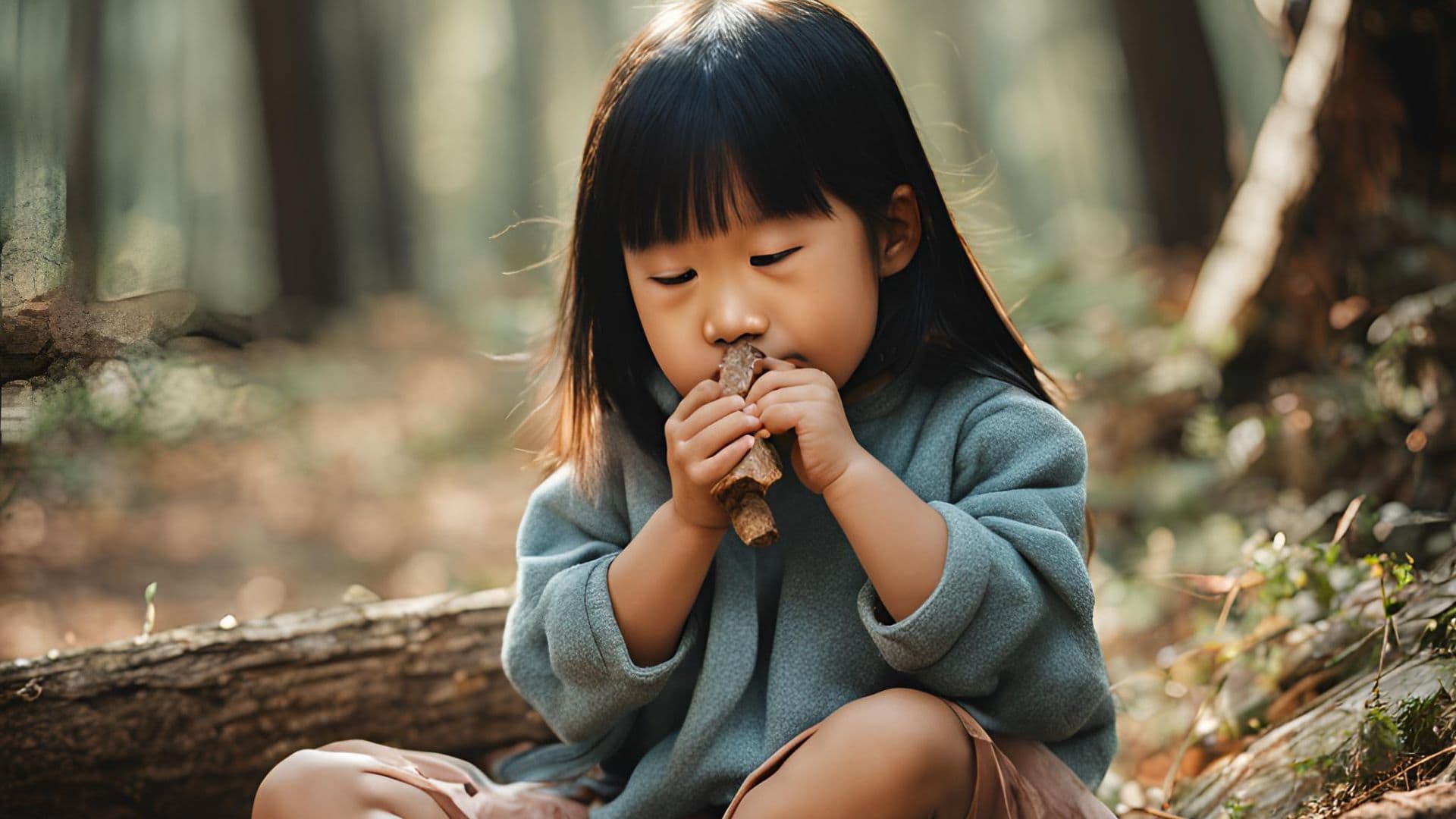
The other day I was on a hiking trail and I noticed a child up ahead crouched down and smelling a piece of wood. Naturally, I was delighted but continued on my way. Within minutes the girl ran past me and I saw she had a leaf in her hand. It was clear she was excited to share her new-found discovery with her parents. Eagerly, she extended her hand, holding the smelly treasure just beneath their noses, waiting to see the reaction. They responded with a smile and together proceeded to explore their surroundings for other olfactory delights.
That simple encounter was a great reminder that children are naturally curious and use their senses to understand the world. And this nosiness serves them for the rest of their life.
"A child’s world is fresh and new and beautiful, full of wonder and excitement. It is our misfortune that for most of us that clear-eyed vision, that true instinct for what is beautiful and awe-inspiring, is dimmed and even lost before we reach adulthood. If I had influence with the good fairy who is supposed to preside over the christening of all children, I should ask that her gift to each child in the world be a sense of wonder so indestructible that it would last throughout life, as an unfailing antidote against the boredom and disenchantment of later years … the alienation from the sources of our strength."
— Rachel Carson (The Sense of Wonder)
I’m convinced that especially the sense of smell induces a deep bond to the natural world. You see, children intuitively know what we adults quickly forget, that using our senses arouses emotion, encourages connection, and inspires empathy. And specifically our sense of smell can lead the way.
Smelling is a physical act (it’s literally chemicals) that connects the smeller to other living beings, thereby giving a level of intimacy that sight and sound don’t offer. Smelling is a direct connection to the conscious part of our brain, which allows us to connect with the world around us mindfully, with purposeful intention. It puts us firmly in the present moment.
Smelling is emotion. It’s a direct connection to the limbic system, including the amygdala, the emotional center of our brain. Smelling helps us create scent associations and allows us to acquire beautiful scent memories that we can return back to years later.
Which is why focusing on smelling with children is such a beautiful act. Studies have shown that unlike visual memories which are formed in early adulthood, scent memories are shaped in the first 10 years of life. Little noses are sponges for taking in smells!
So, why is it that by age five, as children enter school, the sense of smell quickly gets neglected? Think about what teachers led you to focus on as a child. I often think back to how it was for me, as well as my two boys decades later. I greatly lament that things haven’t changed at all over the generations.
Children are encouraged to engage with their sense of sight through drawing, reading, and watching videos. They’re animated to use their sense of hearing by listening to music, learning an instrument, and singing along. Their sense of touch gets stimulated through arts & crafts. Even at home their taste buds might get activated when offered to be helpers in the kitchen.
From what I can tell, nobody is encouraging children to actively use their sense of smell. Why must that be so?
Let us all take the example of the little girl that I saw on the trail, and let us use our noses more to explore the world around us. For, if we do, we might discover that it’s quite magical and worth focusing on more.
This week on my podcast An Aromatic Life:
This week I sit down with Professor Natalia Kucirkova of the University of Stavanger, Norway to explore the significance of olfaction in childhood development, particularly in relation to reading and education.
We discuss the current trends in children's reading habits, the challenges parents face in engaging their children with books, and the potential of olfaction to enhance reading experiences.
We delve into the concepts of phenomenology, affect, and embodiment, and how these can be applied to understanding children's interactions with literature.
We also touch on the need for innovation in children's picture books, the importance of cross-cultural perspectives on smell, and the future of olfactory engagement in education.
With olfaction at the helm, this is an exciting new frontier in children’s reading and literacy, led by our sense of smell, that I can’t wait for you to learn more about.
You can hear this episode and many more on Apple podcast, Spotify, Amazon Music, or wherever you get your podcasts.
It’s so important to me that young children get exposed to the concept of smelling to engage with the world around them that I made it a major theme of the story my colleague, Dr. Kelly Ablard, and I wrote.
If you have children ages 3-6 years old in your life, I believe this picture book can be a wonderful gift for them.

No Place for Plants is a vibrantly illustrated children's picture book that tells the story of a modern day 8-year-old Native American girl from Los Angeles, California named Pukuu’ who is on a mission to save her community garden.
Every Sunday, Pukuu', her wise grandmother Ashuuk, and their pet desert tortoise Paa'ar walk to their community garden to spend time with their friends, including the plants, animals, and insects. But one Sunday, as they are walking to the garden, smelling the plants along the way, they arrive there to find some no-good, absolutely terrible news that could change everything.
Pukuu’, with the guidance of Ashuuk and Paa'ar, embark on an unforgettable journey that reminds us of the importance of community and our connection to Nature.
The hardcover, paperback, and e-book are available for purchase globally on Amazon, Walmart, and Barnes & Noble.