

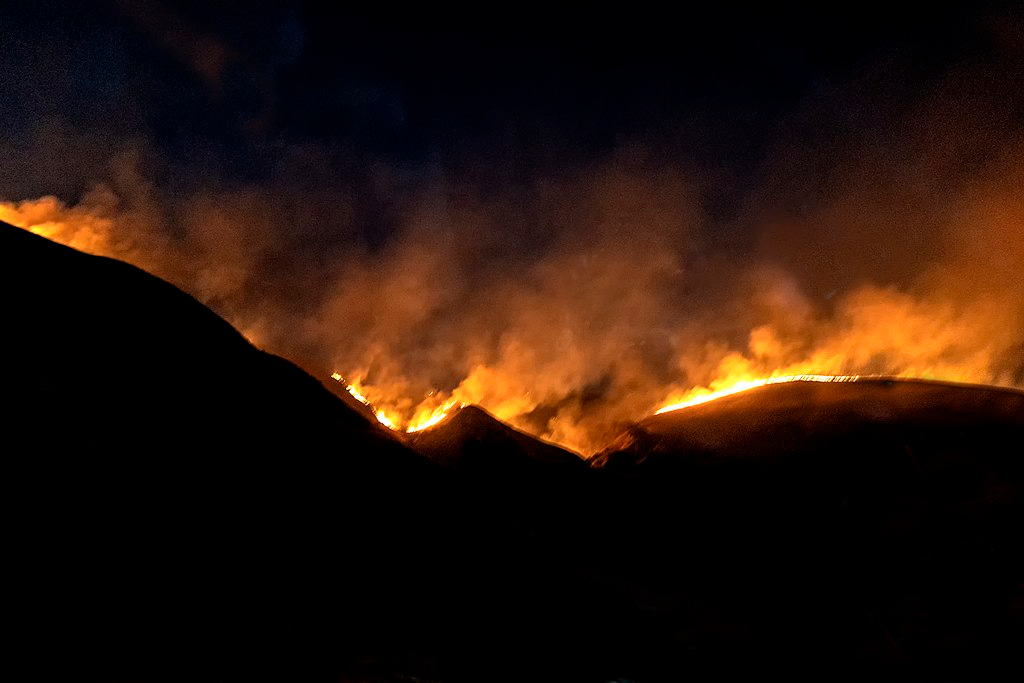
As I sit and write this, it’s been 10 days since the start of the devastating Los Angeles fires. The two biggest, the Palisades and Eaton fires, are now among the most destructive blazes in California history, according to the California Department of Forestry and Fire Protection. My heart aches for all those affected, displaced, and mourning the loss of loved ones and dwellings filled with countless memories.
While I live in Northern California, hundreds of miles away, wildfires are (sadly) part of life here as well. It wasn’t too long ago, back in September 2020, that we in the San Francisco Bay Area felt the “doomsday” effects of countless fires from surrounding areas, as well as neighboring states of Oregon and Washington, all at once.
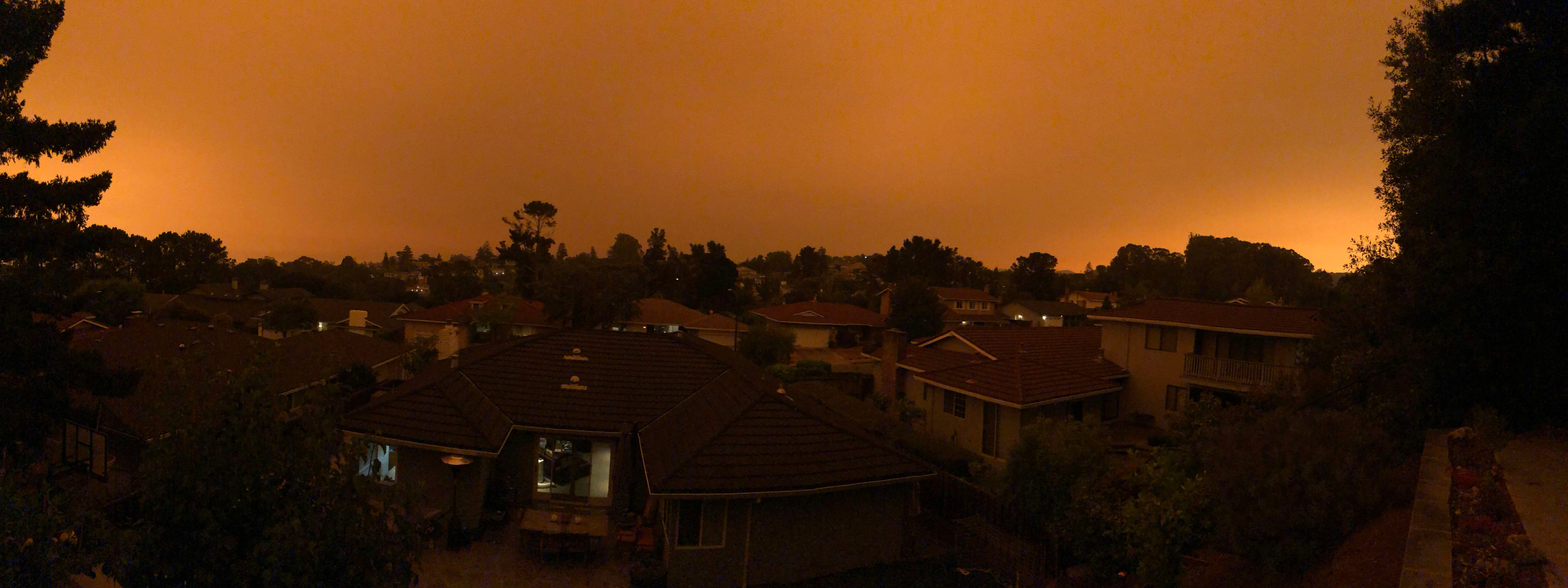
I can’t tell you what an ominous feeling it was to walk outside in the middle of the day and experience a sky lit like a fireball, an eerie stillness all around, and the suffocating smell of smoke permeating the air. As Harold McGee so aptly states in his book Nose Dive, “Fire makes the creation of smells manifest to all our senses.” Indeed it did.
According to the National Interagency Fire Center, California averages more than 8,000 fires a year. And, according to the Climate Reality Project, California ranks #1 in most wildfires globally.
So, it got me thinking: is the smell of wildfires the signature scent of California?
At the start, there are top notes of conifer wood, and sweet vanilla, enveloped in lactones. These are the fleeting initial impressions that greet the nose. A hint of smokiness begins to present itself.
Then, as the fires intensify and burn more material, a heart of bacon-y richness, deeper woody, even clove-like notes present themselves.
Finally, as the fires subside, notes of metallic soot, tar, and burnt plastic linger for days.
The smell of fire has been a part of human life for thousands of years. It’s arguably our most primal smell, one that has many positive connotations, connecting us with cooking, keeping warm, and warding off predators. Yet for us Californians it has turned into a more negative association; one of death, destruction, and despair.
So, while I’d like to believe the scent memories for Californians are optimistic smells of sunshine, salty beaches, and redwood trees, I suspect for generations to come, the smell of smoke and fire will leave a more lasting, pessimistic olfactory impression.
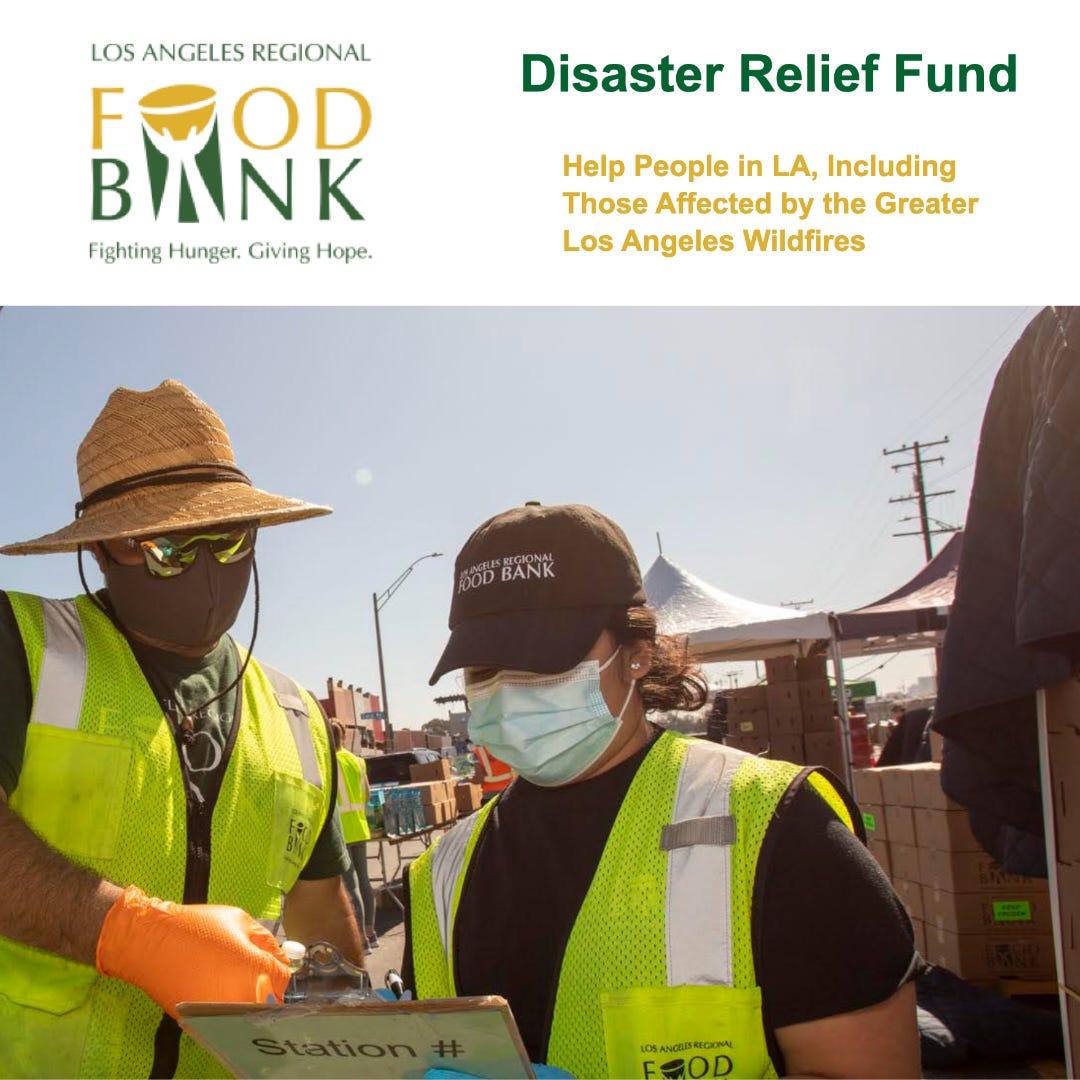
The recent fires in LA County have impacted many families' access to nutritious food. The Los Angeles Regional Food Bank and partner agencies provide food assistance to people throughout LA County in normal times and times of crisis. Your support empowers their work so they can continue to provide relief from the Greater Los Angeles Wildfires and other disasters.
This week on my podcast An Aromatic Life:
In this week's whiff of wisdom, Institute for Art and Olfaction director and founder Saskia Wilson-Brown shares why she believes working with scent is a human right that we should all have access to, and explains why it’s more than just liquid in a bottle.
If you want to dive deeper into Saskia’s work, why not go back and listen to the original full conversation - episode #51.
You can hear this episode and many more on Apple podcast, Spotify, Amazon Music, or wherever you get your podcasts.
oh cool, an episode with saskia 😍