

The Loneliness Epidemic Has a Smell Problem
Your nose knows something you don't.

What if we’ve been so focused on the screens that we’re missing the real culprit?
We talk about the loneliness epidemic as a social media problem, a phone problem, even “a Gen Z problem.” But what if it’s primarily a smell problem? What if the slow de-odorization of our world is quietly dissolving our ability to bond with each other at the most primal level?
In 2023, U.S. Surgeon General Dr. Vivek Murthy declared loneliness a public health epidemic, warning that it poses health risks equivalent to smoking 15 cigarettes a day. The World Health Organization estimates that 1 in 6 people worldwide are experiencing it, most commonly adolescents and young people. These numbers are alarming. But the explanation we keep reaching for - screens, algorithms, the collapse of third places - may be treating the symptom rather than the cause.
You probably already know that within hours of being born - before you can even see clearly - you recognize your mother by smell alone. A landmark 1983 study out of Vanderbilt University found that 90% of mothers could identify their newborn by scent alone, many after just ten minutes of contact. More recent research shows that a mother’s body odor actually helps newborns recognize faces - smell is literally the first way we know another person exists. It’s not just a sense. It’s the foundation of human connection.
I felt this holding my own boys for the first time. As they were placed on my chest, there was an immediate instinct to nuzzle and breathe them in. While I can’t recall the smell exactly, I remember the feeling, the bond that the closeness brought. I didn’t know it at the time, but it turns out that it was biology doing exactly what it was designed to do.
But here’s the thing: human bonding didn’t start there. It turns out I’d been doing it my whole life and just didn’t know it.
Remember writing notes with wooden pencils on paper and passing them discreetly to your best friend in class? Playing tag and hide-n-seek at the local park? Hanging out at the mall, sharing fries in the food court, spraying every perfume tester at the department store counter?
These memories aren’t just visual. They’re olfactory. Back then, our noses were working hard: reading people, building trust, identifying who was safe, what felt good, where seemed like home. We just didn’t know it at the time. And this work is especially critical during the teenage years, when our sense of smell is supposed to be doing some of its most powerful bonding - guiding us toward friendships, dating, and community.
So why is it falling apart?
A 2023 study found that Gen Z adults (aged 18–26) are the loneliest generation, with 71% reporting loneliness. Over the past two decades, young adults have reduced in-person time with friends from 150 minutes per day to just 40, while time spent in isolation has increased by 24 hours per month.
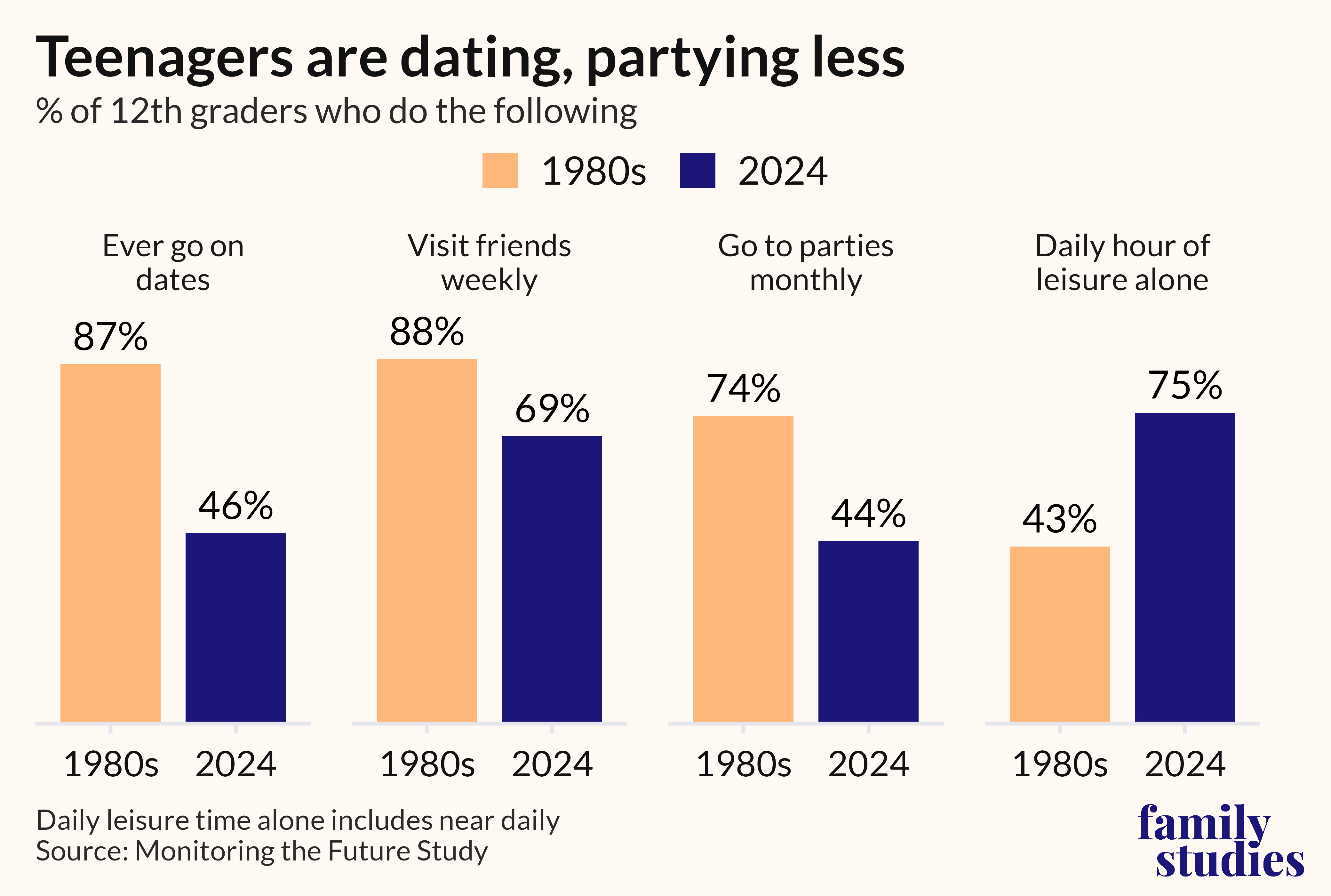
It turns out that we handed young people devices that deliver everything except the one sense evolution designed specifically for human bonding and connection. While dating apps may appear to help young people look for a compatible mate, and FaceTime now lets you talk and see your friends, or online gaming lets you “hang out” and talk with people all over the world while you play, none of these “transactional” activities truly reveals a level of intimacy that helps give you clues about safety, compatibility, and closeness.
An invisible wall has been placed between us, and we built it ourselves.
The good news is that something is shifting. My 20-something boys tell me they’re sick of the dependence on their phones. They want IRL experiences. They want to meet a partner in person, not on an app. And they’re not alone: 78% of dating app users report burnout, 69% of apps downloaded in 2025 were deleted within a month, and 90% of Gen Zers say they’d prefer to meet someone offline.
They’re already finding their way back to physical presence. They just don’t have the language for why it matters so much.
Maybe it’s their nose talking. Maybe it’s been trying to get their attention all along.
Think about what it actually feels like to be at a basketball game - the smell of the gym, the sweat of the athletes, the cologne drifting up from two rows below. You can’t get that watching it on TV. How about going to a party, or a bar, where people are nestled close together. Without realizing it, your nose is busy doing the sleuthing: identifying compatible friendships, suitable partners, and safe spaces.
We yearn to be in rooms with each other not just out of nostalgia. There’s a deep-rooted knowing - biological, not sentimental - that we’re wired for real-life bonding and intimacy, through smell.
Reclaiming this doesn’t require an intervention. It requires one simple shift: put yourself back in the physical world and let your nose do what it was designed to do.
Choose the gathering over the group chat. Go to the concert, not just the playlist. Sit close to people. Let the room smell like connection. That slight discomfort of physical proximity? That’s your olfactory system waking back up.
And if you have young people in your life, bring them along. You don’t need to explain the science of olfactory bonding to a teenager. Just give their nose somewhere to go.
We were born knowing how to do this. We just need the reminder.
Being together with someone IRL involves being comfortable with silence, communicating with looks & gestures, and sharing the surroundings. The Proustian model is individualistic; it’s all about what YOU smell and YOUR emotions. Equally important: smell is part of the socially SHARED experience of the world.
This is brilliant! A completely different perspective I hadn't considered before but which makes perfect sense. I struggle to watch movies at home because, without the smell of the popcorn machines, it doesn't feel special (I also think this is one of the reasons that movies don't have the cultural impact they used to). I don't enjoy pubs like I used to because they smell like offices these days. The one time I tried Christmas with a fake tree it just didn't feel like Christmas because the smell was missing. Bring back smells!!