

Smell as Resistance
What if we tried something different?
In the late 1970s, inside Northern Ireland’s Maze Prison (Long Kesh), prisoners were staging a protest like no other. They used smell.
It began in 1976, when the British government ended Special Category Status and treated Irish republican prisoners as ordinary criminals instead of political prisoners, prompting prisoners to refuse the prison uniform and wrapping themselves in blankets instead. It became known as the “Blanket Protest.”
But it didn’t move the needle much, so by 1978 they changed tactics. After the brutal beating of a prisoner by a prison officer, several prisoners decided to smash all the furniture in their cells. Prison authorities responded by removing the furniture, leaving the prisoners with only blankets and mattresses. When prisoners then refused to leave their cells, toilets couldn’t be emptied, and they began smearing their own waste on the walls, urinating on the floors, and hanging leftover food-soaked blankets on the walls. The stench that filled the corridors became unbearable.

The prison authorities attempted to keep the cells clean by spraying disinfectant and hosing down the walls. But the prisoners didn’t let up. This “Dirty Protest”, as it was known, went on for several years. Over 250 men took part. Guards, administrators, and even visiting clergy couldn’t escape the stench. In fact, they complained that it followed them home.
What this smelly form of protest did was allow political prisoners to assert their identity and resist being treated as ordinary criminals; an important distinction, as governments often blur this difference to make resistance look like simple criminal behavior.
Using smell in this way was an embodied strategy for resistance. The stench was emotionally destabilizing and physically uncomfortable. Think about how your own body responds when you smell something foul - it enters you deeply. It lingers inside as much as out. And precisely because of that, unlike a sign or shouts of protest, a smell is not quickly erased.
Power prefers what it can see, touch, and hear because it can be more easily removed. But smell gets through. It takes up space, creates a collective experience … all through an invisible cloak.
Smell is a powerful tool of resistance because it’s intimate (it enters your body), it’s collective (it fills shared spaces), and it’s unstable (can’t be easily contained).
But there are other forms of resistance using smell …
Smell as Purposeful Occupation of Space
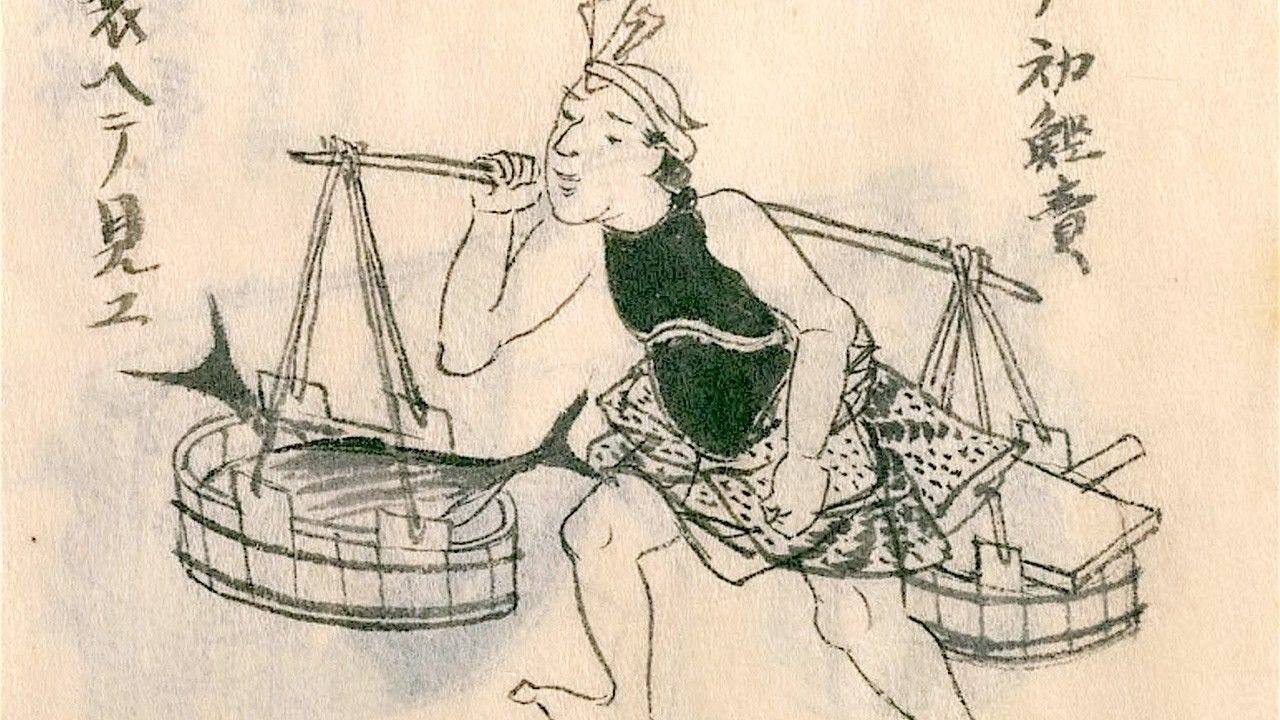
During the Edo period (1603–1868), in tightly regulated cities like Edo (Tokyo) Japan, open protest was dangerous. But smells were harder to regulate and became a clever form of resistance for low-status workers. Fishmongers, tanners, and fermenters were known to purposefully intensify production smells during disputes with officials or landlords, allowing the strong odors to spread into upscale neighborhoods.
Authorities complained about “nuisance smells” that disrupted order and dignity, and made them incredibly uncomfortable. But the workers didn’t care. The smells were used to reassert the workers’ presence and agency in spaces that authorities tried to control, turning the air itself into a contested site of social power.
Smell as Environmental Resistance
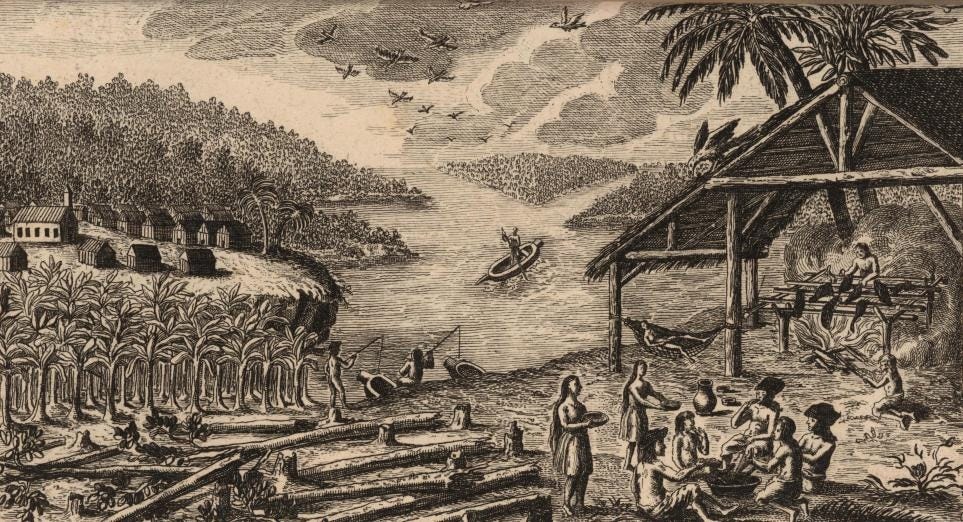
In 17th- and 18th-century North America, some Indigenous groups used smell as a strategic form of environmental resistance. By spreading decaying animal matter, burning strong-smelling plants, and creating smoky environments, they made camps and paths difficult or unbearable for colonial soldiers and settlers. European accounts repeatedly described these odors as “unbearable,” framing them as barbaric, yet to Indigenous defenders, the smells were a way of asserting control over their land and driving out invaders. Smell was used as a nonviolent means of defense. Independence Lost by Kathleen DuVal
Smell as Diversion

In the Atlantic World of the 1600s–1800s, enslaved people sometimes used scent and odor strategically to resist capture and control. While white colonists and slaveholders often racialized Black bodies as inherently “foul” to justify domination, many enslaved people turned the logic of smell back on their oppressors in subtle ways.
For example, runaways and freedom seekers deliberately rubbed strong substances like red pepper or onions on their feet to confuse tracking dogs, knowing these strong odors would interfere with the animals’ sense of smell and throw pursuers off their trail. Others claimed to use mud or turpentine the same way to disguise their scent and make it harder for slaveholders to follow. This wasn’t anything dramatic, but rather quiet, clever ways to resist control, stay safe, and take back a little power in a system designed to erase their freedom. Andrew Kettler, Smell of Slavery interview
Again and again, when words weren’t enough, they made authority smell.
It turns out, across history, resistance hasn’t always looked like chants or marches. Sometimes it’s looked like refusing to wash, burning what stinks, filling space with odor until power is forced to confront what it would rather ignore.
You can outlaw speech.
You can regulate assembly.
But you still have to breathe. 😊
What kind of stink shall we make?
Did you like what you read, but don’t want to commit to a monthly paid subscription?
My natural perfume group does a regular creative prompt that the whole group makes a scent of. Our lastest prompt is about resistance. I was struggling with the concept of this and how to make a perfume out of this idea until I read your post about it. It was beautifully coincidental to read this. Thank you for sharing and helping me to come up with some ideas. I love the way you look at scent from so many perspectives. Keep up the wonderful work!
Strategies worth thinking about. Thx for sharing your research.