

Sight Got Instagram. Smell Got a Candle Aisle.
For everyone who notices what no one else does.
Yesterday on my daily walk with my husband, we passed our local park and I caught a whiff of freshly cut grass, still sharp in the air. I smiled and felt a rush of warmth run through me - it’s one of my favorite smells in the world. We continued on, and then the smell of star jasmine hit my nose. I looked around, and in the distance spotted a house lined with the bush. I smiled again, quietly, to myself.
My husband never reacted. Why would he? It wasn’t loud. It wasn’t bright. It was just there, in the air, already gone.
We kept walking. But the smells stayed with me.
That’s the thing about being a smeller. We’re constantly receiving information that the world around us has collectively agreed not to register. We sense the approaching rain. We know someone’s been smoking even with no cigarette in hand. We recognize dinner is almost ready even before anyone calls us.
And we do nothing about it - because what would we do? There’s no place to put it. No feed to post it to, no playlist to add it to. So we just quietly keep it to ourselves and move on.
We talk a lot about what it means to have no sense of smell. The anosmia community has taught us, rightly, how difficult that absence can be. But there’s a quieter story that gets less attention: what it feels like to have it, fully, in a world that has almost entirely organized itself around two other senses.
We’re fluent in something the world has never quite built a home for.

Think about what society actually built around sight and sound.
Photography. Cinema. Art. Architecture. Fashion. Social media. The entire discipline of design. Billions of dollars. All for what the eye can see.
Then music. Concerts. Radio. Podcasts. Noise-canceling headphones so we can protect our carefully curated audio from the uncurated one outside. We have playlists for moods, for workouts, for breakups, and for long drives.
Now think about what got built for smell.
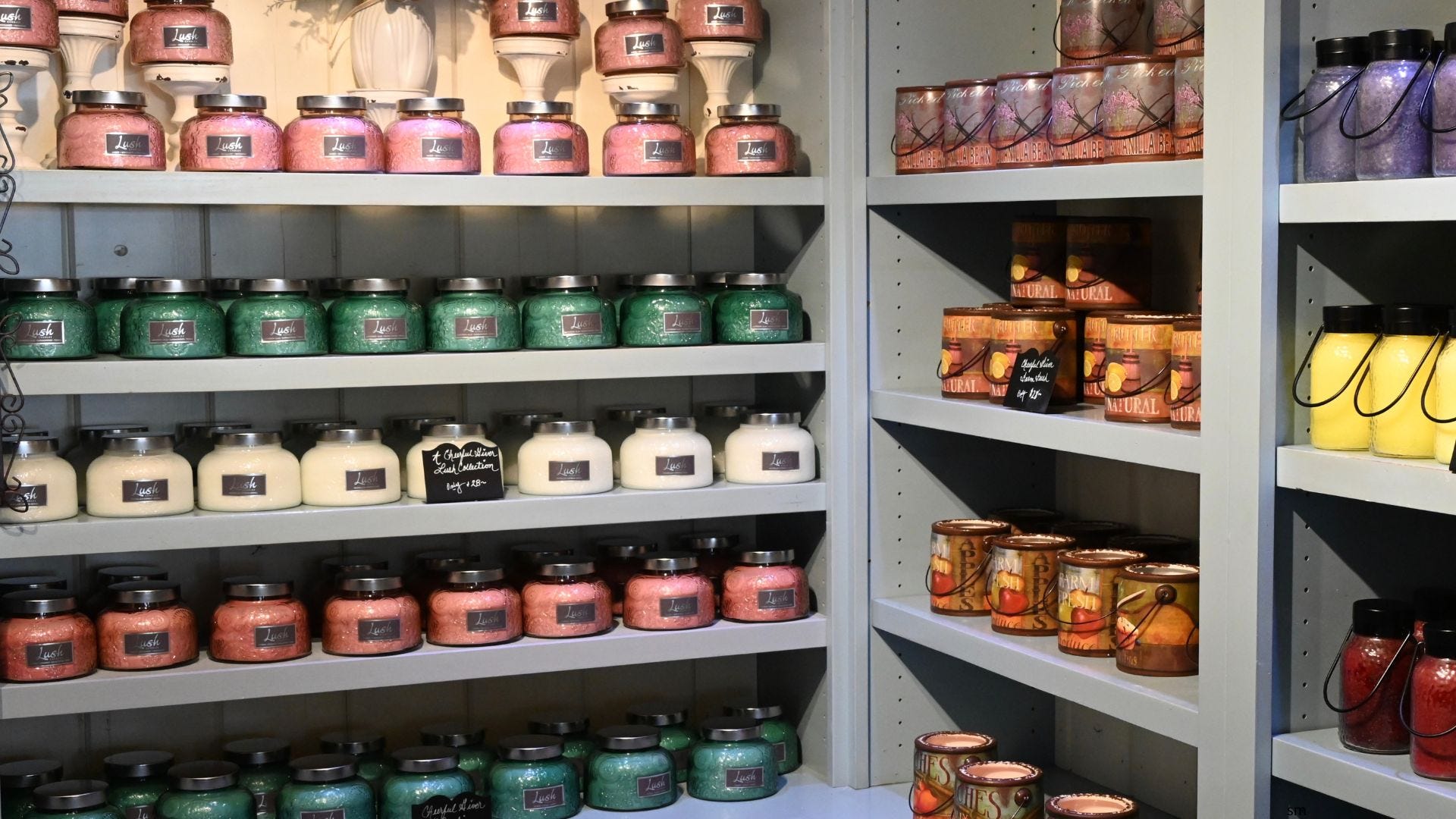
A fragrance industry, elitist and secretive by design. A candle aisle. The occasional article about how scent affects mood, usually buried in a wellness section between sleep tips and the benefits of cold-plunging.
That’s more or less it.
There’s no smell equivalent of Spotify. No accessible archive of significant smells like there are of films or books. No shared language, save fragrance industry speak, that most people actually use. When smell does get our attention - genuinely stop-in-your-tracks - the best most people can offer is “nice” or “yuck” or “what is that?”
I know you have more words for smells than that. You’ve been developing them quietly, mostly alone, for years.
Here’s what I think that actually requires, and why I think we underestimate this beautiful sense.
Staying loyal to smell in this sight-centric culture is a sort of act of resistance. Not a dramatic one. It won’t get written about, and we’re not going to be celebrated for it. But every time we stop to register what our nose is telling us - every time we don’t override it, dismiss it, or hurry past it because the visual world is demanding our attention, we’re choosing a different way of being present.
And that’s not easy.
We’ve built environments specifically designed to capture our eyes and ears. Screens are everywhere, optimized by entire teams of people whose sole job is to hold your gaze. Sound fills every waiting room, every elevator, every gym, every restaurant that’s decided that silence is bad for business. The sensory competition for our attention is relentless, and almost none of it is coming from smell.
So when we keep smelling - when we actually stay with it - we’re doing something that takes a kind of quiet stubbornness. We’re keeping a practice alive that the world around us has been slowly, persistently discouraging.
I don’t think most smellers think of it this way. It’s just who we are. But it’s also a choice we keep making, even when there’s no reward for it.
Today is Sense of Smell Day, which means well-meaning content will circulate about how underrated smell is, how it’s tied to memory, how we should “stop and smell the roses.” All true. None of it wrong.
But I want to say something slightly different to you today.
You don’t need to be reminded to smell. You already do. You’ve been doing it your whole life, quietly, without a designated day, without infrastructure, without a cultural moment that really makes room for what you experience. You’ve been showing up for this sense in a world that mostly hasn’t reciprocated.
That matters. Not because smell will suddenly get its Spotify or Instagram. I mean, maybe it will someday, in some form. That would be cool. But really it’s because the way you move through the world is richer for it. More textured. More honest. You’re getting information about people, places, and moments that are real, specific, and are yours. You’ve never stopped paying attention to smells even when everyone around you did.
Smell doesn’t need you to rescue it. It’s been here the whole time, just doing its thing. And so, quietly, stubbornly, have you. I thank you for that.
Happy Sense of Smell Day.
If you’re interested in learning about how to find pleasure, identity, and ritual in food and fragrance beyond smell - come join us on Monday. You can register here. It’s free!

Join STANA and WTSA for a thoughtful 80-minute online webinar exploring how people with anosmia and smell dysfunction can still experience meaning, pleasure, and connection through food and fragrance. This session will examine how eating, self-expression, ritual, and identity extend beyond scent alone.
Participants will hear from Joshna Maharaj, author of "Take Back the Tray" and a chef with smell dysfunction, on how taste, texture, temperature, trigeminal sensations, visual cues, and emotional connection can shape enjoyment of food even without smell. Frauke Galia, of An Aromatic Life, will then explore how fragrance can remain meaningful through ritual, memory, aesthetics, trust, and personal identity, while also highlighting what the fragrance industry could do better for anosmic consumers.
Through reflection and discussion, this webinar will invite attendees to reconsider smell loss not only as absence, but as a different form of sensory engagement. The session will conclude with audience Q&A, key takeaways, and opportunities for future collaboration, education, and research.