

Practices in Smelling: Spicing It Up
Finding moments of delight this time of year.
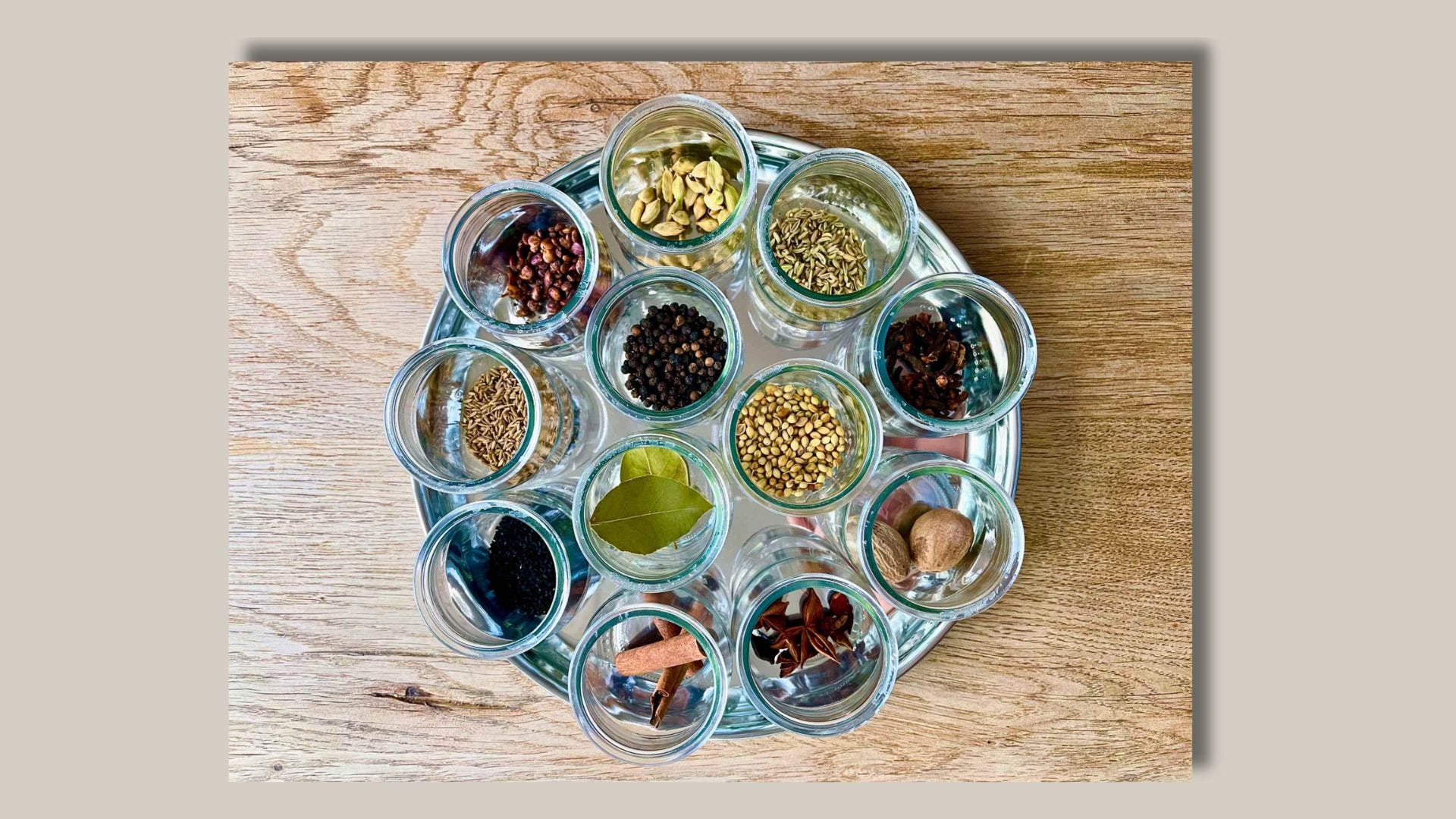
This month we continue with the series, “Practices in Smelling,” which aims to inspire and animate you to engage with your sense of smell more.
This time of year I really enjoy cooking and baking. Maybe it’s because my boys are back home for the holidays and I can spoil them a little. But, to be perfectly honest, it’s probably also because of the aromas that fill the house. There’s something comforting about the smell of a hearty stew simmering on the stove, or cookies baking in the oven, that reminds me that things are going to be alright. They will be alright, won’t they?
I was trying to put my finger on what it is exactly that creates this feeling and it occurred to me that it’s the spices that find themselves in so many of the foods we eat during the holiday season. I find spices magical because they bring so much depth and dimension to otherwise boring foods. They add complexity, and sometimes even color, which makes eating a real joy.
To me spices are the quintessential flavor “spark” that we all need right now to help create little moments of bliss. And it’s your sense of smell that’s the catalyst which unlocks this pleasure because about 80% of our eating experience is our olfactory system at work.
The spices I’m using a lot right now are cinnamon, clove, and ginger. All of them are warming, which seems fitting this time of year. I put them in my oatmeal, add them to soups, and generously sprinkle them into baked desserts. The aromas never fail to delight!
My favorite drink to make is glühwein (mulled wine) because it takes me back to strolling through the Christmas markets (Weihnachtsmarkt) in Germany. Glühwein literally means “glow-wine” I imagine because of how you feel after drinking it in ceramic mugs outside in the bitter cold. You can smell the signature sweet, rich blend of cinnamon, clove, and star anise, plus orange slices for a dash of brightness, wafting through the air even before you arrive at the stall. It’s usually the first place I go. Here’s a simple recipe if you’d like to try it yourself.
So, all this time in the kitchen got me thinking about how we can practice smelling this holiday season, and I thought about spices being the perfect choice. Here are a few olfactory exercises you can try out as you cook & bake over the coming weeks.
I’ll start by saying - I’ll go out on a limb here - that most of us don’t pay too much attention to individual aromas as we’re preparing food. I’m the first to admit that I was this way, probably because I was too worried about the actual outcome of what I was making to appreciate the individual inputs that brought the result.
But over the years, I’ve paid more attention to my sense of smell, and I’ve learned to appreciate the role aromatics play in making the process of creation as enjoyable as eating. Here are two “exercises” to try so you can notice the nuances of your spices more.
Exercise #1: Compare & Contrast Whole
I love doing this because most of the time I just gather my ingredients and go right to work creating. I don’t spend the extra few minutes appreciating and experiencing the individual ingredients, like the whole (not ground) spices I put in. So, the next time you use any whole spice - whether a cinnamon stick, cloves, or star anise - take a moment to smell them as they are.
What does the individual spice smell like? Describe it in your head, or out loud, using words (assigning words forces you to pay attention more and that helps you better understand).
Compare whole spices and notice what’s similar. What facets appear in both? Describe using words.
Now take a moment and smell what makes them unique? What facets set them apart? Describe using words.
Continue to do this with each meal you make. The repetition helps solidify the olfactory profile in your mind, and in no time you’ll more clearly understand the role that spice plays in what you create.
Exercise #2: Follow The Aromatic Journey
This exercise is always fascinating to me because you can really notice how a spice changes in aromatic profile throughout the cooking/baking process, all the way to the final result. Here you’ll want to focus on one whole spice in the dish you’re preparing and follow its journey all the way through.
Begin by smelling the spice whole. This is your reference point for the rest of the journey.
Now, depending on what spice it is, evaluate the smell in prep. Whether the recipe calls for grinding to powder, or toasting dry or in oil to bloom, pay attention to how the odor profile changes. What do you notice? How does the aroma change? What remains the same?
Next, notice how the spice’s aroma profile changes when added to the dish. Whether that means it’s added to a hot mixture on a stove (ie. soup recipe), or a cold mixture in a bowl (ie. cookie recipe), pay attention to how the odor profile changes. What do you smell? How does the aroma change? What remains the same?
Lastly, smell the final dish when you’re done, before you begin to eat (we’re evaluating only through the nose). Can you find the aromatic notes of the spice in the dish? Notice how subtle or strong that spice’s aroma is relative to the total ingredients.
Try doing this with a variety of spices you work with this holiday season and I promise you’ll be delighted by what you learn.
Did you discover anything new? Did either of these exercises allow you to find a quiet moment within?
Let me know how it goes, and feel free to leave a comment. ⬇️ I’d love to hear.
This week on my podcast An Aromatic Life:
In this week's whiff of wisdom, artist and designer Dr. Kate McLean shares why we should appreciate our own city’s smellscape and what specifically we should be smelling.
If you enjoy this whiff, do spread the insight by sharing this episode with your friends and family. And don’t forget to subscribe to the podcast so you don’t miss an episode.
Lastly, if you want to dive deeper into Kate’s work, why not go back and listen to the original full conversation - episode #70.
You can hear this episode and many more on Apple podcast, Spotify, Amazon Music, or wherever you get your podcasts.
Looking for a holiday gift for the young child in your life?

No Place for Plants is a vibrantly illustrated children's picture book that tells the story of a modern day 8-year-old Native American girl from Los Angeles, California named Pukuu’ who is on a mission to save her community garden.
Every Sunday, Pukuu', her wise grandmother Ashuuk, and their pet desert tortoise Paa'ar walk to their community garden to spend time with their friends, including the plants, animals, and insects. But one Sunday, as they are walking to the garden, smelling the plants along the way, they arrive there to find some no-good, absolutely terrible news that could change everything.
Pukuu’, with the guidance of Ashuuk and Paa'ar, embark on an unforgettable journey that reminds us of the importance of community and our connection to Nature.
The hardcover, paperback, and e-book are available for purchase globally on Amazon, Walmart, and Barnes & Noble.