

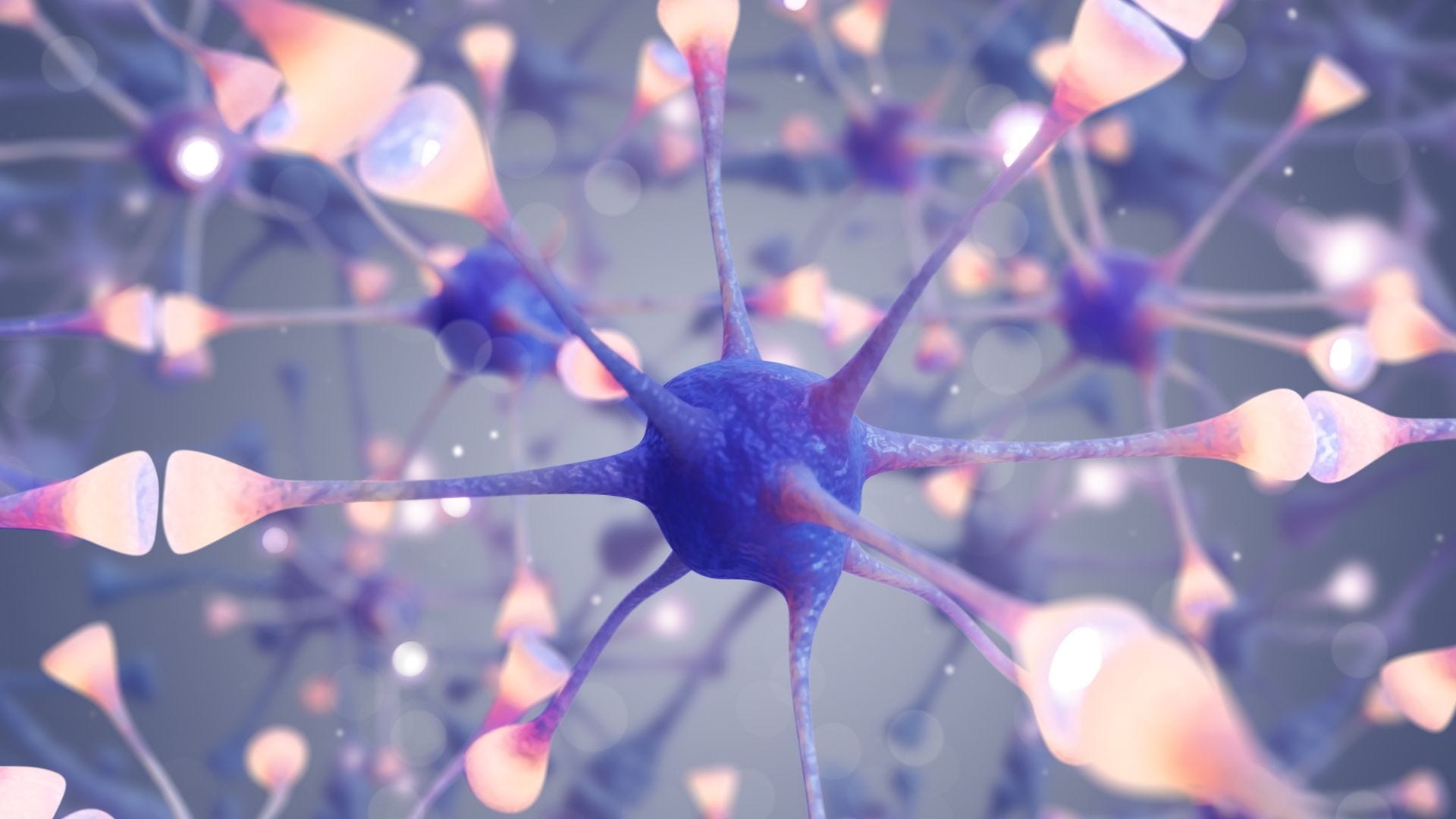
This summer a study from the MIT Media Lab made news for its alarming findings on what ChatGPT might be doing to our mental sharpness.
Participants were put into 3 groups: ChatGPT, Google, and “Brain-only”, and over 3 sessions were asked to write essays from prompts like “Does true loyalty require unconditional support?”, “Should we always think before we speak?”, and “Is a perfect society possible or even desirable?”.
Then in the 4th session the ChatGPT group was asked to write the same essay using only their brain, and the “Brain-only” group was asked to use ChatGPT.
The aim of the study was to get a better understanding of the neural activations during the essay-writing process, and to assess the cognitive engagement and load used.
What they discovered was fascinating.
Those that were using ChatGPT first, and then had to switch and use just their brain, showed weaker neural connectivity and cognitive engagement.
The “Brain-only” group, on the other hand, showed the strongest, widest neural connectivity when first writing the essay on their own and then switching to ChatGPT. In fact, rewriting an essay using ChatGPT engaged more extensive brain network interactions.
The “Brain-only” group also had higher memory recall, unlike the ChatGPT group which wasn’t easily able to quote from the essays they wrote just minutes before.
While the study hasn’t yet been peer-reviewed, and there were several limitations, like low sample size and sample diversity, it’s a glimpse into learning how our brain might evolve as we start to use large-language models (LLMs) like ChatGPT more.
The Environmental Impact of ChatGPT:
Energy consumption: A May 2025 study highlights the enormous energy consumption of various LLMs, including ChatGPT. For instance, one short prompt to GPT-4 uses about 0.43 watt-hours of energy. If 700 million prompts are run in a day, that’s the same amount of energy as powering 35,000 U.S. homes for a year. Note: there are about 2.5 billion prompts from global users every day, so it’s actually worse!
Water consumption: Cooling AI servers requires large amounts of water. A 2025 paper projects that in 2027 AI will use water that’s the equivalent of more than half of the total water used in the UK.
CO₂ emissions: It’s estimated that training a whole AI model produces around 283 tons of carbon dioxide, which is the equivalent of 300 round-trip flights between New York and San Francisco, or nearly 5 times the lifetime emissions of the average car.
The study got me thinking: is the temptation to use ChatGPT too great? Is it the junk food of our time? Cheap, accessible, convenient, and satisfying?
The lure of not having to put effort into problem-solving or idea-creation might help us in the short-term (saves time), but what does using the tool day after day, week after week, year after year, do to our ability to critically think in the long term?
Case in point - the tools are so good that you don’t need to think about what something smells like, or figure out what words to use. Just this year the descriptors have gotten increasingly more nuanced and rich.
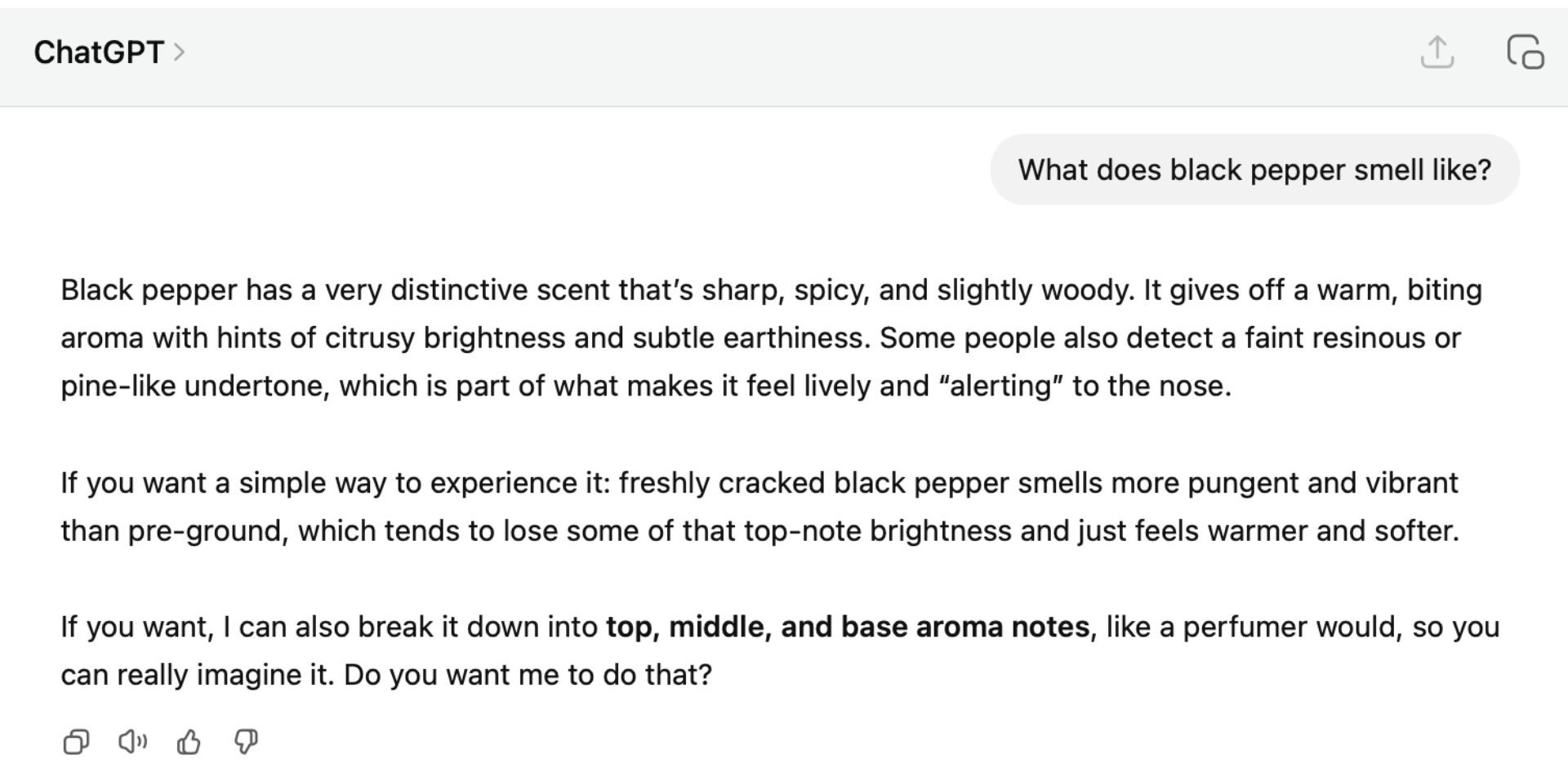
Well, I’d like to suggest that using your nose might be the perfect antidote. Why?
Direct Experience
Smelling is one of the most intimate experiences we can have because you’re literally drawing odor molecules into your nose. Experiencing it firsthand is a physical, embodied act that no AI description can replace.
Personal Meaning
When you describe a smell, you’re using the thinking parts of your brain, and building your own odor vocabulary. These words are personal and become anchors to memories, associations, and emotions that are unique to you. If AI gives you a description, you’re just borrowing language, not deepening your own - no thinking required.
Sharper Perception
Like tasting wine or listening to music, active smelling sharpens perception. By sniffing and describing, you train your brain to notice subtleties you’d otherwise miss. If AI describes it for you, no mental effort is required - just empty calories: fast food served on a platter.
So, unlike digital shortcuts, that nose right in front of you, that you always carry around, is a really powerful tool for mental training and curiosity.
Did you know that it’s World Alzheimer's Month? I want to let you know about a fascinating conversation this week on my podcast An Aromatic Life, with neuropsychologist Alex Bahar-Fuchs, PhD which explores the connection between smell and dementia. He offers some great tips for keeping your mind sharp through smelling.
But here too, in this month’s Practices in Smelling, I invite you to exercise your smell muscle and sharpen your mind. Here’s an exercise to try which is inspired by the study.
