


We’re deep into the election season here in the U.S. and so I thought I’d share some insights on how smell is being used in politics, and why it’s so effective.
If you pay close attention, you’ll notice subtle olfactory jabs permeating in the media. Here are just a few examples.


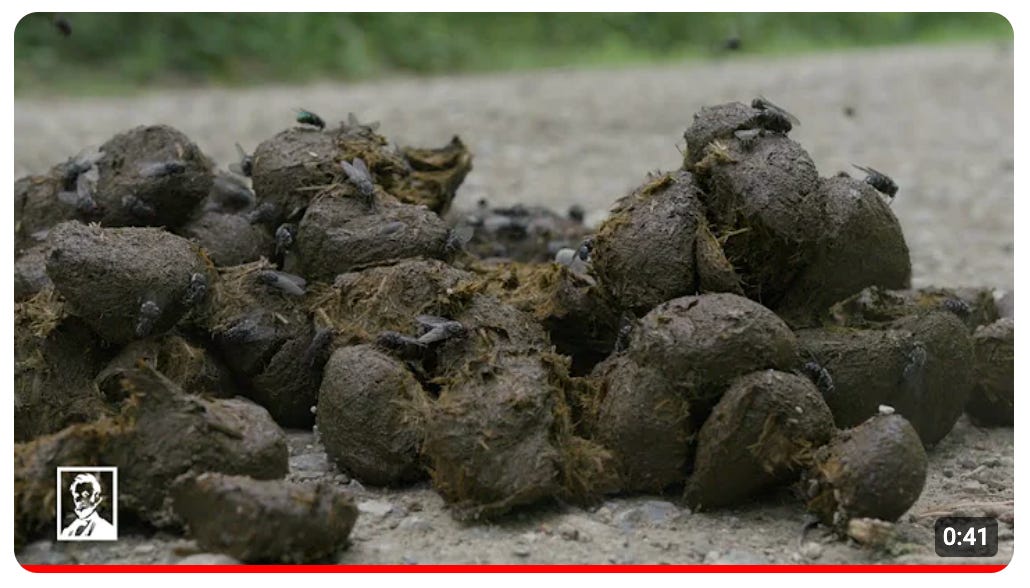

And, of course, AI generated political commentary, too.


Why are olfactory tactics so effective?
Simply put, the idea is rooted in othering through disgust. Bad smells are disgusting and elicit a notably intense reaction. One that you can feel in your body. Remember that smelling is an embodied experience.
Studies show that people who feel disgust become harsher in their judgment of “the other.”
Tactically, if you repeatedly associate someone with stink, then you begin to form negative associations of that person. In essence, you get lured into a false consciousness that’s not based in reality, but rather a social construct.
In fact, one study showed that your sensitivity to bad smells might affect your politics and make you more sympathetic to right-wing authoritarian views.
Using olfactory tactics for political gain is nothing new, of course. Chinese communist leader Mao Zedong was known for his ingenious use of smelly words to outmaneuver his political opponent.
With all this in mind, I encourage you to not only be more aware of the subtle smell references, but reflect on what strategies might lie behind the messages. Let me know what you discover. Leave a comment below about what you’ve observed.
This week’s episode of my podcast, An Aromatic Life, is the most important conversation I’ve had to date, and I really hope you’ll have a listen.

The truth is that we’re taught very little about the North Atlantic slave trade in school, and what we do learn stems from only one perspective, the white lens.
This conversation takes a new perspective - through the nose - and boy does that reveal truths we need to learn. Here’s what you can expect in the conversation…
Prof. Kettler begins by defining olfactory racism, and then explains the ‘Anglo Atlantic Nose’ as the English departed for the New World.
He shares important olfactory-focused concepts like “embodied knowledge”, ”miasma theory”, “false consciousness”, and “emotions of disgust.”
He then explains the role of smell during the Middle Passage, the horrific “othering” of the African slave, the role dogs played olfactively, how the Civil War intensifies olfactory racism and makes it worse afterwards, and most importantly the role Capitalism plays in olfactory racism.
He also gives the perspective of the ‘African Nose’, revealing how important smells were to the African resistance.
Prof. Kettler concludes by sharing what he knows to be true after writing this book, tells how we can apply the learnings to our lives today, and reveals what he’s working on next.
You can hear this episode and many more on Apple podcast, Spotify, Amazon Music, or wherever you get your podcasts.
And lastly, our children’s book…

There is no more urgent time than now. Biodiversity is in crisis, there's a lack of green space from urbanization, Nature-deficit disorder is rising, cultural sustainability is highly threatened, and our sense of smell continues to be ignored from an early age.
The good news?
Children intuitively understand we are part of the natural world. And they instinctively use their senses to explore. They’re naturally curious and are filled with wonder. This story connects both the adult reader and the young child with those emotions.
If you have children ages 3-5 years old in your life, this book animates them to become stewards of the plants, passionate ambassadors for the natural world, and active smellers.
The hardcover, paperback, and e-book are available for purchase globally on Amazon, Walmart, and Barnes & Noble.