


Today I’m introducing a new series called “The Language Lab,” which aims to help you better express what you’re smelling. I’ll be sharing insights and exercises each month with the intention of guiding you in describing smells more readily.
I’m sure you’ve noticed that putting words to smells is hard for us humans. We’re not taught to describe smells at an early age. In fact, the focus is primarily visual and auditory, like “What color is the truck?” and “What sound does the duck make?”. You rarely hear an adult tell a child “What does that flower smell like?”. We stick to simple binary answers like “good” and “bad” which doesn’t tell us much of anything.
Why should we even care about putting words to smells?
Well, for one, it helps us make more sense of the world around us, and gives us new perspectives on what we’re experiencing in real life. We actively see and hear our experiences all day long because it’s where our culture focuses. And that’s what heavily influences how we perceive the world. So, by actively describing what we smell, we add new dimensions and facets to our lives, think kaleidoscope.
Also, expressing what we smell allows us move from the unconscious to the conscious, putting more attention on our experiences. We smell all day long, with every breath in fact, and we don’t even know it. So much of our daily olfactory exposure takes place without our awareness, and that’s a shame. We’re missing so much and I believe it’s time to bring smell to the forefront.
Lastly, describing smells actually makes you a better smeller. Yup, it’s true. You not only build a larger vocabulary, which helps you distinguish between smells, but it also heightens your awareness of odors, and improves brain function. Not bad, right?
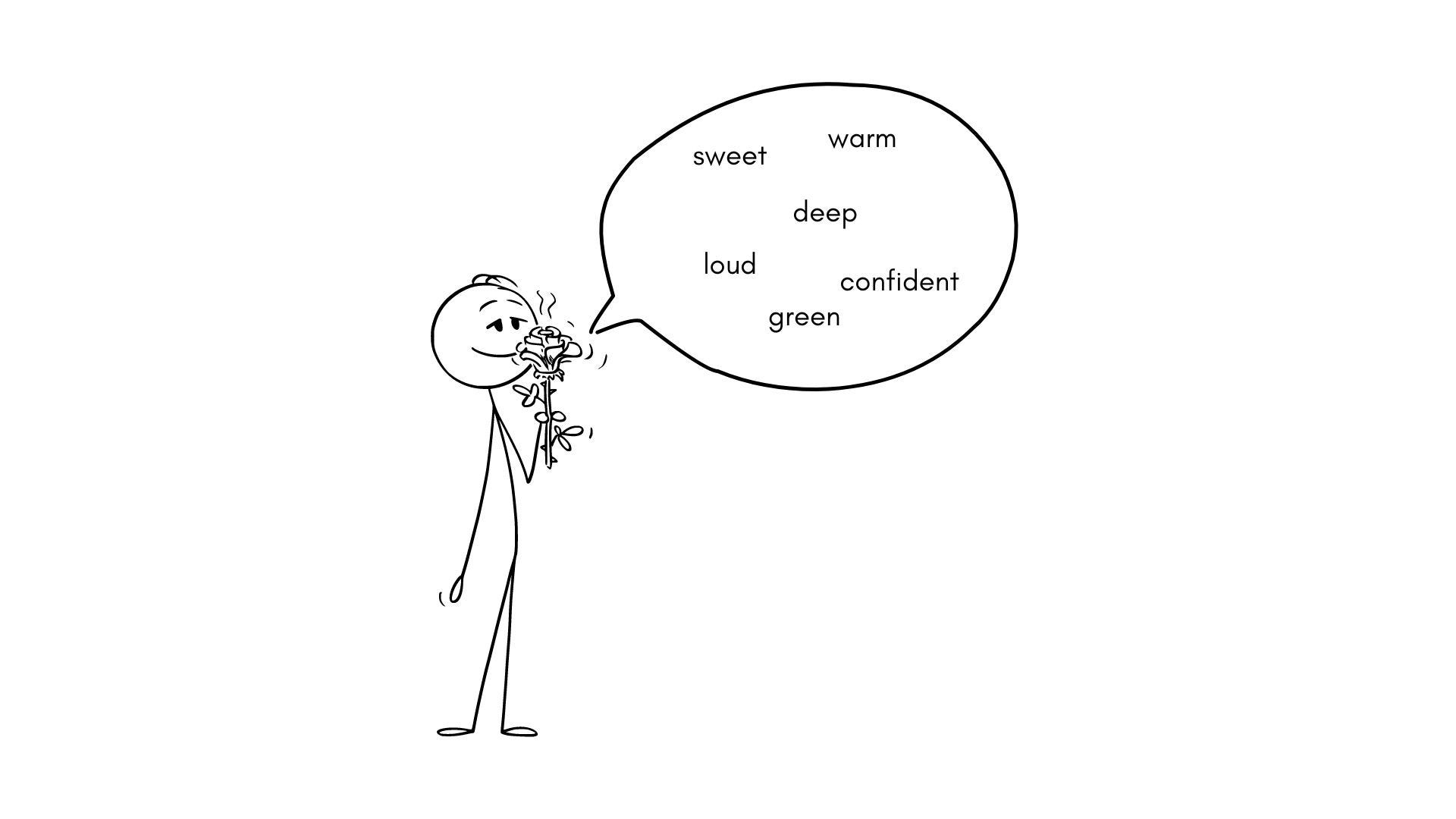
Ultimately, language gives you the focus and mindfulness to live more in the here and now. It also allows you to acknowledge what you’re experiencing, which can be really joyful and nose-opening.
So, what kinds of things will you find in The Language Lab?
Well, to start, I’m going to focus on helping you feel more comfortable and uninhibited about describing what you smell. I notice a real fear in people thinking that what they say might be wrong. The good news? There’s no right or wrong answer! Set yourself free and describe away. All words and expressions are welcome here!
We’ll then progress to expanding our vocabulary and further dimensionalizing our descriptions. We’ll move beyond typical, nondescript smell words like “earthy” “sweet” “floral” “fruity” and my (not!) favorite “fresh”. You’ll be surprised to notice what this does for your awareness, discrimination, and enjoyment of all kinds of smells.
I do have to mention that The Language Lab posts will be for paid subscribers only. I feel this is a more intimate and community-focused feature that will encourage conversation and an exchange of ideas. I may even do a live online session now and again for deeper connection.
For today I’ll leave you with this exercise to try out.
Throughout the day, take a moment to smell something around you and put words to what you’re experiencing - any words - and as many as you can. Importantly, please say them out loud. Remember there’s no right or wrong. It’ll be hard and uncomfortable at first, but with practice you’ll notice it becoming more fluid and quick.
Let me know how it goes by leaving a comment with your experience.
This week on my podcast An Aromatic Life:

In the latest episode, I sit down with Sensory Scientist and Wine Tasting Mastery Coach Dr. Isabelle Lesschaeve to discuss interesting ways to train your nose.
Isabelle explains what a sensory scientist does, shares why it's helpful to identify smells, and provides tips for better recognizing those I-know-what-that-smell-is-what-is-it smells.
She gives her perspective on why it's hard for us to describe smells, gives tips on how to do so, and encourages us to trust our senses more.
Isabelle also shares her opinion on what people get wrong about wine tasting, and gives tips on how to know if a wine is good quality.
You can listen to this episode, and all others, on Apple podcast, Spotify, or wherever you get your podcasts.
Did you know that I’ve co-written a children’s book called No Place for Plants?

The book tells the story of a modern day 8-year-old Native American girl from Los Angeles, California named Pukuu’ who is on a mission to save her community garden.
Every Sunday, Pukuu', her wise grandmother Ashuuk, and their pet desert tortoise Paa'ar walk to their community garden to spend time with their friends, including the plants, animals, and insects. But one Sunday, as they are walking to the garden, smelling the plants along the way, they arrive there to find some no-good, absolutely terrible news that could change everything.
If you have children ages 3-5 years old in your life, this book animates them to become stewards of the plants, passionate ambassadors for the natural world, and active smellers.
The hardcover, paperback, and e-book are available for purchase globally on Amazon, Walmart, and Barnes & Noble.
I will be contributing 5% of any net sales proceeds to the Smell & Taste Association of North America, an organization dedicated to helping those with smell and taste dysfunction.