

How Flowers Made Our World
A smell-focused interview with biologist David George Haskell.
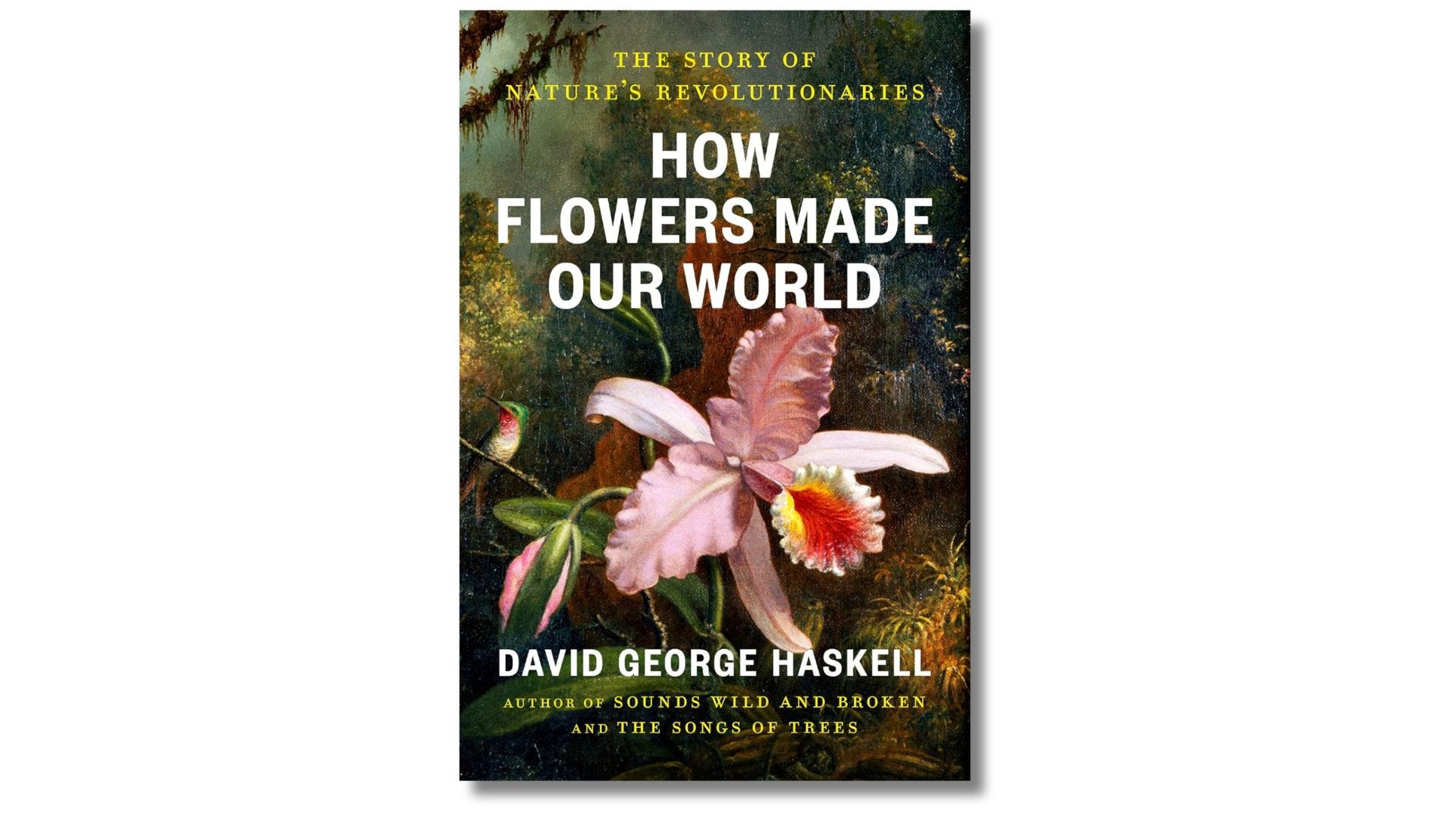
“We live on a floral planet, yet flowers don’t get the credit they deserve. We admire them for their aesthetics, not their power. Without flowers, human beings would not exist.” So goes the premise of award-winning writer and biologist David George Haskell’s new book “How Flowers Made Our World: The Story Of Nature’s Revolutionaries.”
Released this spring, the book is highly engaging and very informative. I had the chance to interview David about it, and while he’s been active on the press tour, I wanted to take our conversation somewhere most interviewers haven’t really focused on: the smell aspects of the flowers’ story.
Here’s what he had to say.
You argue that 90% of all plant species are flowering plants, yet they’ve been sidelined in the story of how our world came to be. Reading your book, I kept noticing a parallel: the sense of smell is equally pervasive and dismissed, useful but not quite serious, decorative rather than foundational. Does that resonate with you?
Yes, the importance of flowers and of scent is underrated in our culture right now. This has not always been the case. Flowers have been used, in the past, as symbols of royal and imperial power, and the sense of smell has been more central to human experience in many other times and cultures.
Our ideas about gender play a role. In contemporary Western culture, flowers and scent are often boxed into narrow gender roles, rather than being thought of as belonging to and experienced by all genders. This limits the richness of our human experience and also hides essential truths from us, that both flowers and aroma are central to the world’s creativity and interconnectedness.
You describe a shift when flowering plants arrived: the relationship between animals and plants moved from mortal enemies to partners and even servants. How central was scent to driving that shift, and what did it offer that color or shape couldn’t?
When flowers evolved, they created new relationships with pollinating insects. These interconnections vastly increased the efficiency and productivity of reproduction in plants. Scent was central to this revolutionary change. By releasing a plume of aroma, flowers guided insects across large distances, even in dense vegetation where visual sight lines are blocked. Insects are great at following aromatic trails to these sources, and so aroma was a key floral innovation that allowed efficient pollination to evolve.
The surfaces of many petals are essentially living aroma diffusers. The cells on the very top layer of the petals are filled with aromatic oils that waft out into the air. Aroma not only attracts insects, it carries with it nuanced information about the identity and reproductive state of the flower.
This is important because different insects are focused on pollinating different flowers. A beetle interested in magnolia blooms, for example, can distinguish between the magnolia and some other flower from dozens of meters away. Some modern plants have incredibly specific aromas. Orchids, for example, often produce an aroma that speaks to only a single species of insect. The same is true for many figs and yuccas. Even among flowers that are pollinated by multiple species of insects, there is specificity. The blend of aroma produced by different species of wild daffodil is tuned to different groups of insects, with some daffodils releasing aroma melanges that are more attractive to flies, while others release blends that speak to moths or other insects.
Interestingly, if we look at the descendants of the very first flowering plants, species that branched off early in the evolution of flowers, they’re all aromatic. This suggests that aroma was present very early in the evolution of flowers.
The euglossine bees and orchids have one of the more surprising aromatic relationships in your book: the bees don’t collect scent for food, but forage it from multiple flowers to construct their own perfume for courting females. You write that flowering plants each offer “distinctive aroma blends with recognizable profiles”, like competing perfume brands. How do the bees actually bind and carry those scents, and what does their selectivity tell us about how plants evolved to differentiate themselves?
These bees invented perfumery millions of years before humans. The male bees travel from one flower to another literally scraping up the aromatic oils from the flowers. They use brushes on their fore-legs to sweep the perfumed oil to the hind legs where combs squeeze it into grooves and pouches. Sometimes, these will also collect aromas from mushrooms or decaying vegetation. When the male bees are ready to court females, they waft air over the perfumed oils, showing off the distinctive blend that they have created. In this way, the male bees advertise their identity and foraging ability. Standing out in a crowd is important, and so when many bee species and orchid species are all found in the same area, both the bees and the orchids make unique blends. The flowers draw from just under two hundred aroma molecules. Each species of orchid uses between one and six of these for the dominant “notes” in their perfumes, in different combinations and strengths.
You describe the challenge flowers face in getting scent exactly right: attract the right pollinators, repel the wrong visitors. The field mustard plant seems to have solved that problem elegantly - its scent draws bumblebees while actively offending caterpillars. How does a plant arrive at that kind of precision, and what does it tell us about how scent evolves under competing pressures?
Evolution allows flowering plants to fine-tune their aromatic signaling to meet local conditions. This adaptability is especially rapid among plant species that can breed very quickly. Field mustard, for example, can go through many generations in a single year. This allows scientists to do interesting experiments. When the field mustard is grown in places with many bumblebees, but not many caterpillars, floral aroma swiftly evolves to become stronger. In this way, the flowers draw in their favorite pollinator. But, in places with lots of caterpillars, the floral scent actually attracts these leaf-munching pests, and the field mustard evolves a much more muted aroma. These experiments show that, from the perspective of the plant, floral scent has both costs and benefits.
The aromatic profile of every flower is therefore a result of a long “conversation” between the plant and its local environment. In wild tobacco, for example, individual plants can shift their aromatic expressiveness based on local experience. The flowers are usually pollinated by hawkmoths. But if too many hawkmoths are attracted, moth caterpillars can become a real problem. If this happens, the wild tobacco plant will switch off its floral aroma and rely on hummingbirds as the main pollinator.
You describe floral aromas as a language, where chemical variants function like words, and combinations carry meaning. Sometimes they signal to just one or a small number of pollinators, but more often to a broader group. You write that “this variety of aromatic expressivity is created by the richness of ecological relationships.” What does that richness look like in practice? How do those relationships actually shape what a flower says?
The richness is a result of the incredible diversity of ecological relationships. Yucca flowers, for example, are pollinated by a very small number of moth species. The aroma of the yucca flower is therefore finely tuned to the sensory preferences of the moths. In addition, the Yucca flower offers very sticky pollen that only a handful of moth species are able to gather. In return, the moth is a very diligent pollinator, but also exacts a price. The moths lay their eggs inside the yucca flower and the moth caterpillars eat some of the yucca seeds. This tight relationship works for both parties, though, and has existed for at least 40 million years, a bond mediated by the specificity of the flower’s scent.
Sometimes, the aromatic relationship between a flower and its pollinator is deceptive. Some orchids smell just like female wasps. Male wasps are duped into trying to mate with the orchid, acting as a pollinator but getting no reward.
For other flowers, welcoming a wide variety of insects by having an open flower and abundant nectar is a better strategy, especially in places with diverse and unpredictable pollinator communities. Many asters take this route, thriving in multispecies communities.
We tend to relegate floral scents to the bouquet or the perfume bottle: pleasant, but not consequential. Have we underestimated how deeply floral aromas have shaped human evolution, not just our aesthetics, but our biology?
For most of us, yes we radically underestimate the power of aroma, including Floral aroma. People who work with perfumes often have a much deeper and more nuanced understanding. Through both personal experience and centuries of perfumery know-how, we have a lot of cultural knowledge about how aromas affect our feelings, thoughts, and identities. Formal scientific study lags behind perfumery. We lack a map of exactly which aroma molecules stimulate which aroma receptors in our noses. And we lack scientific understanding of how aroma molecules interact with others to change our thoughts, feelings, and behaviors.
Intriguingly, some floral aromas are exactly the same molecules that are produced by human skin. Maybe, when we apply floral perfume, we’re giving a little boost to the scents that we most want to emphasize? But most floral aromas are unique to the plant kingdom, and so we express our individuality by becoming chimeric beings. We merge our aroma with that of flowers, and become more ourselves. The “self” becomes a community. This is the original genius of flowers: to link living beings into expansive and creative webs.
At the end of your book, you offer “Invitations to Play with Flowers.” Can you leave us with one aromatic invitation?
Play is a form of joyful curiosity. I hope that readers will enjoy these activities that involve our bodies and senses. The simplest and most powerful is to sit with a flower, maybe for 15 or 30 minutes, and consider the world from the flower’s perspective. Let your senses roam into the many manifestations of a flower, from aroma to texture to color to form. Gently touch. Stems might have sticky or fluffy hairs to slow unwanted insects. Petals can feel warm in the sun and rubbery-cool in the morning. Brush the sexual parts to feel the grip of the stigma and the powdery or granular textures of pollen. Bounce your fingers against the flower, using your kinesthetic sense to understand which parts are stout or pliable. Smell, in short little huffs, then in long inhales.
To whom is the flower speaking? Who are the flower’s collaborators? How did the flower get here? Go beyond first impressions and see where open-ended curiosity takes you. Flowers are great communicators. We just need to take the time to pay attention. As French thinker Simone Weil wrote, “Attention is the rarest and purest form of generosity”. Let’s give flowers some of that generosity and see where it leads.
Visit David’s website: https://dghaskell.com
Connect with David on Instagram @davidgeorgehaskell
If you’re curious about some of David’s other work, have a listen to my conversation with him about his book Thirteen Ways To Smell A Tree, which is also fantastic and worth adding to your collection.

In this episode David explains how trees smell, reveals what aromatic language they use to communicate with other living beings, and spells out how we should smell a tree. He then shares what made him decide to write the book, including how we can re-engage with trees and rebuild connections to the natural world.
David gives an inspiring answer to the question of which one tree we should smell, and reveals which tree smell is most meaningful to him. They then go deep into two of the thirteen smells in the book, the Green Ash tree and Gin & Tonic, where David reveals some intriguing aromatic stories.
He also shares why it’s so important to pay attention and invites the listener to engage in practices of smelling (especially with others). David also explains why he chose to include the link between sound and smell to remind us that all of our senses are connected.
He reveals what he hopes people will take away from the book, what gives him hope for the future, and what’s next for him (hint: it’s his latest book). This is a truly inspiring conversation that you’ll want to come back to again and again.
Wow! This was an amazing interview, Frauke! So much fascinating information about flowers and scent that I didn't know. Thank you for sharing! 🌻🌹
Riveting. Thank you so much for this interview! This has been added to my reading list.