

A Botanical Garden Exhibition That Awakens Our Sense of Smell
An interview with the curator.
There are some beautiful things happening across the U.S. and today I want to share one of them with you: an olfactory exhibition at a botanical garden in Missouri.
If you have a botanical garden near you, I hope this inspires you to visit and engage with the plants in new ways - not just by looking, but by connecting with them more deeply through smelling. Even if you can’t get to a garden, maybe stroll through your neighborhood and let your nose lead the way. It’s magical!
The Missouri Botanical Garden in St. Louis is doing something truly special, inviting visitors to connect smelling with a deeper appreciation for aromatic plants. Their exhibition, Smelling the Bouquet: Plants & Scents in the Garden, runs through March 31, 2026. And since most of us (sadly) can’t experience it in person, I wanted to bring a bit of it to you here today. But do go if you have the chance!
Following is an interview with Nezka Pfeifer, the curator of the exhibition, who generously shared her vision and hopes for visitors near and far. Enjoy!
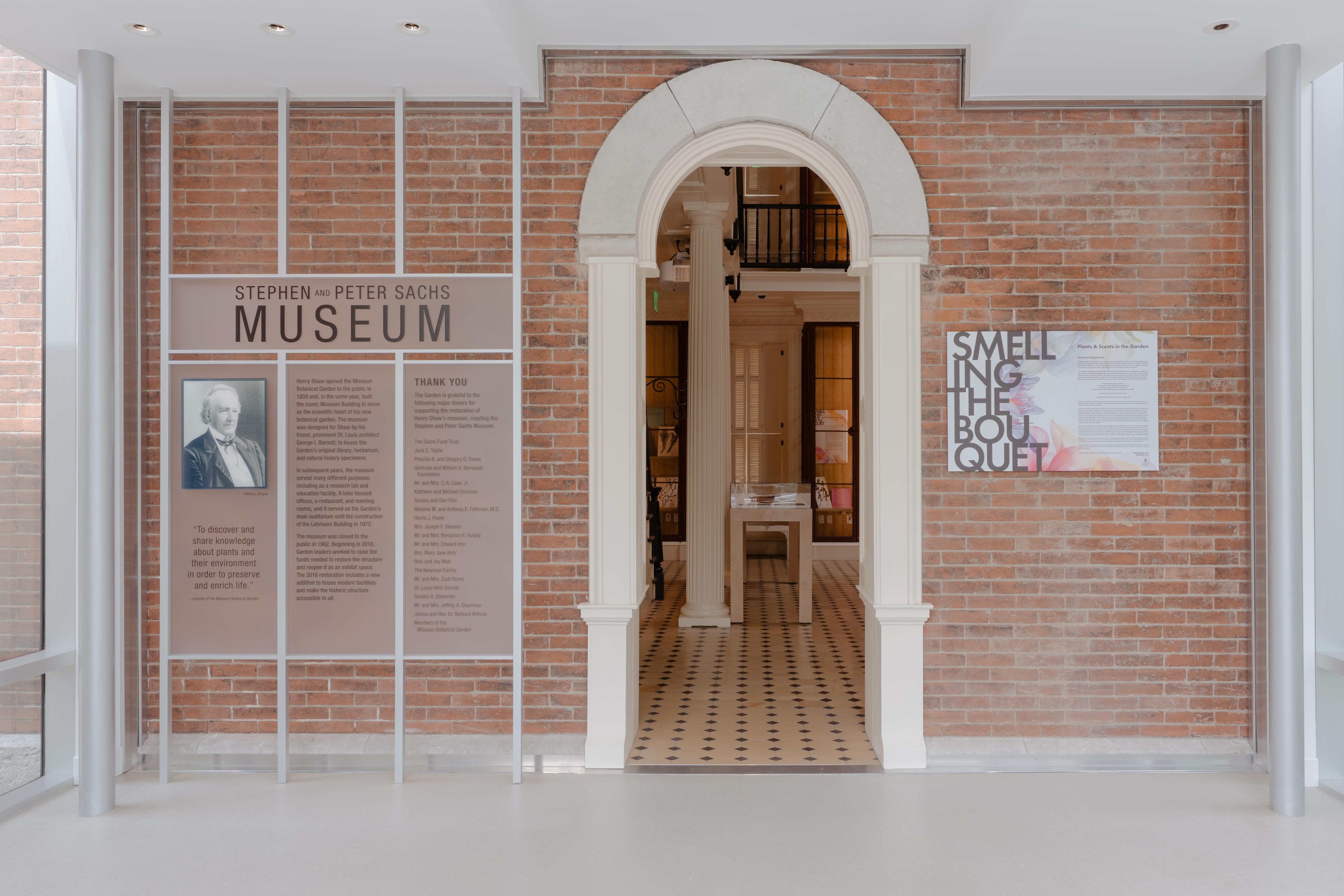
Frauke: What inspired you to create the Smelling the Bouquet exhibition in this moment?
Nezka: The opportunity to open the exhibition was the culmination of several years of planning and development - and a wish many years in the making - that beautifully coincided with the growing interest and expertise in the use of scent in museum spaces, and the interpretation of fragrance for many kinds of experiences. Originally, I was inspired by a very unique art exhibition in 2012 curated at the Museum of Arts and Design in NYC called The Art of Scent. Then when I became Curator of the Sachs Museum at the Missouri Botanical Garden, I realized I was in the ideal setting to create an exhibition exploring the incredible diversity of plant scents and the many ways humans use them.
F: The exhibit explores the spectrum of scents plants create, inspired by the diverse live and scientific collections at the Missouri Botanical Garden. With so many plants and scent stories to choose from, how did you decide which ones to highlight?
N: Great question! That was one of the biggest challenges in curating the exhibition. I wanted to include scents familiar to most visitors - those central to perfumery’s long history, like rose, jasmine, bitter orange, bergamot, cistus, oakmoss, and orris root - alongside plants used in incense and others with unique stories from our live collections at the Garden. To explore the latter, I collaborated with two St. Louis-based perfumers, Shawn Maher and Weston Adam. Over several months, we held after-hours sniffing sessions around the Garden and in the conservatories, identifying blooming plants that could inspire new fragrance interpretations. Some were classics like tuberose and gardenia, while others - water lily, ixora, and campanita - offered rarer scent experiences for inspiration. We even included a carrion flower from our Shoenberg Arid House, which Weston translated into an unsettlingly meaty scent! Aside from that one, the eight fragrances created for the show are available through the perfumers’ sites - so visitors can quite literally experience the scents of the Garden at home.


F: Most of us won’t be able to visit the exhibit in person, but you offer a wonderful virtual tour for us to explore. I’m delighted to see that you offer so many opportunities to smell! Why was it important for you to include active smelling, and what does scent add that simply viewing can’t?
N: Thank you for mentioning the virtual tour! I’m so glad our Garden’s Digital Interpretation team made it possible for anyone to access the exhibit online, though I do wish we’d figured out how to let visitors smell virtually! In curating Smelling the Bouquet, I wanted scent to be central, not secondary. The idea of a ‘spectrum’ of smells became a kind of mandate: I wanted to include sweet, spicy, and complex aromas that reveal the incredible range of volatile organic compounds plants produce. Limiting it to just a few wouldn’t have captured that diversity, or sparked curiosity. With nearly three dozen scents, visitors can explore as much or as little as they like. Ultimately, my goal was to help people build confidence and curiosity around their sense of smell: to engage their noses, share impressions, and expand their own olfactory vocabulary.
F: The exhibit shows how plants use volatile organic compounds to communicate. Could you share a favorite example of this plant “language” in action?
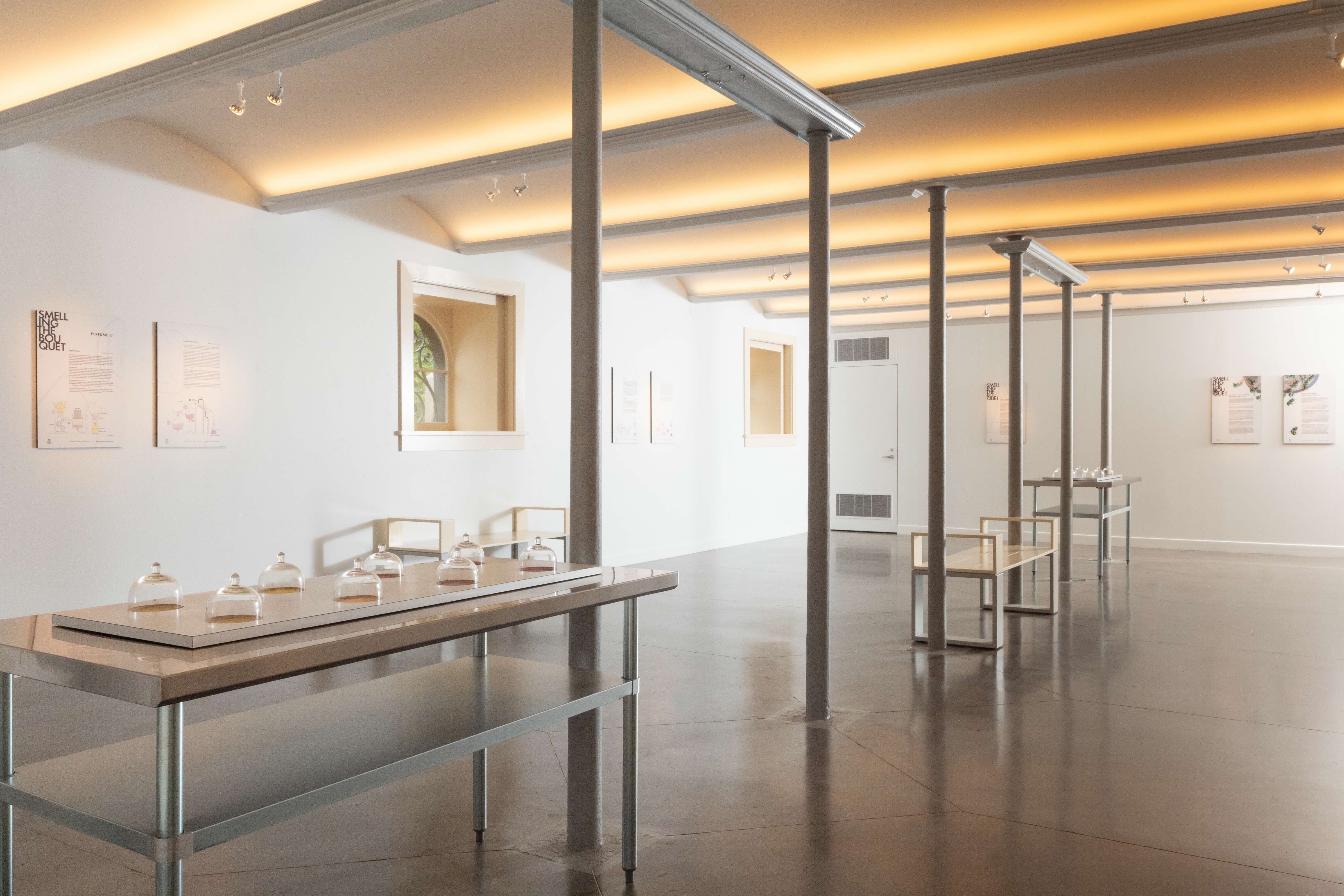
N: Yes! Even though humans have learned to harness plant fragrances, the VOCs plants create were never meant for us. One of my favorite parts of the exhibition is the research and information shared by two members of the Ramirez Lab at UC Davis, which studies the function and evolution of chemical signaling in orchid bees (and other organisms) and plants. Jasen Liu studies orchid floral scent and functional morphology, and Marissa Sandoval investigates the chemical ecology of an orchid bee mating system across different levels of biological organization. You can learn more about their work in this great video. At our ‘sniffing table,’ visitors can smell six VOCs most prized by male orchid bees (Euglossa dilemma), who collect and blend these compounds - like eugenol, p-dimethoxybenzene, myrcene, beta-pinene, limonene, and cineole (eucalyptol) - to create their own perfumes for attracting mates! Each species has its own unique perfume, which may even drive their evolution. To human noses, these scents are sharp and spicy rather than delicate, but it’s fascinating to think how irresistible they are to the bees.
F: Your gardens offer fragrant plants that have been part of human culture for thousands of years. Is there an ancient practice in the exhibit that still feels alive today?
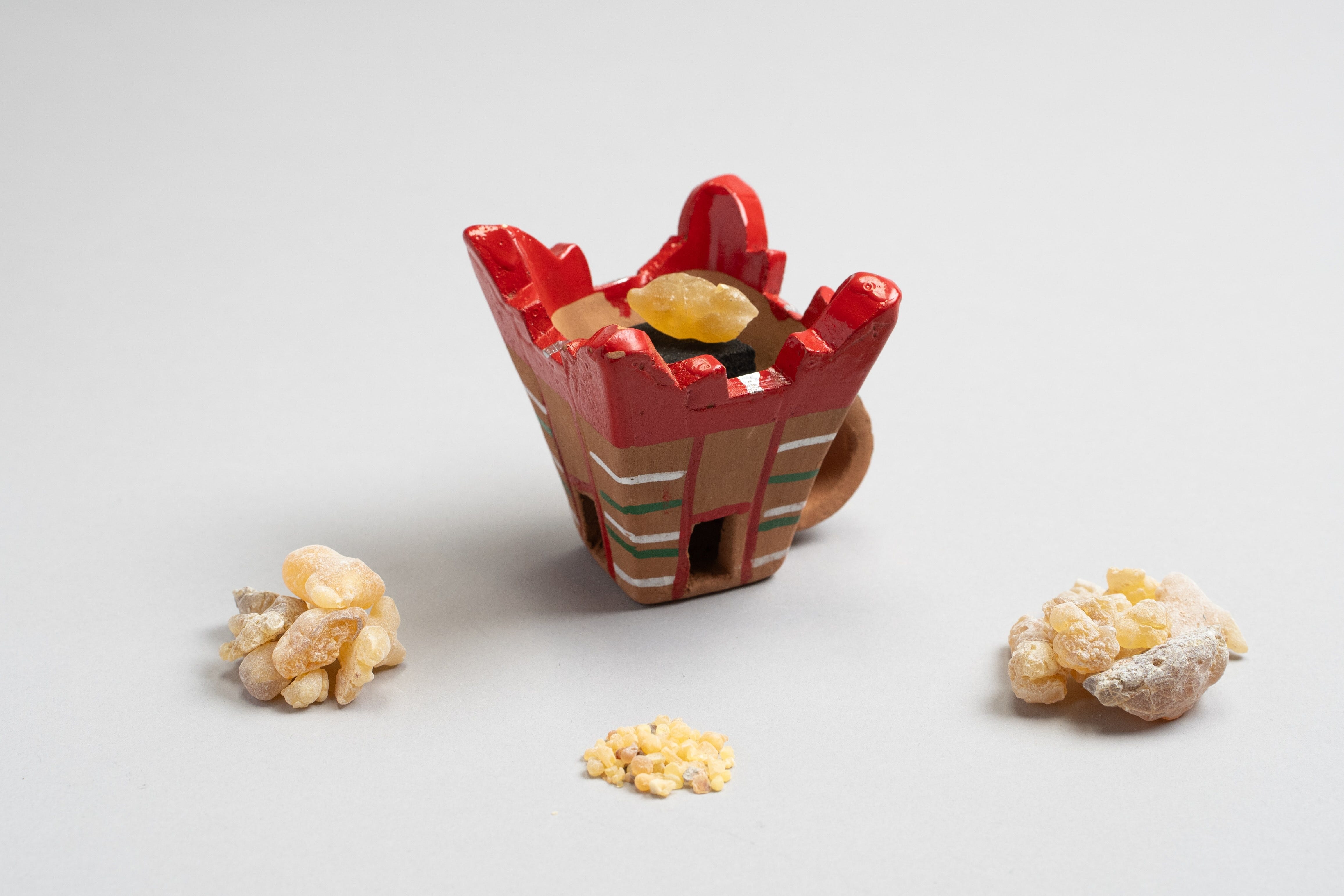
N: One of the most historic scent practices featured in the exhibition is the smell of incense, or the use of different plant materials that are burned for different cultural practices. The word perfume itself comes from the Latin per fumum, meaning ‘through smoke,’ and the craft of perfumery is thought to have begun in ancient Mesopotamia around 7,000 years ago. Incense remains central to many religious and cultural traditions to this day. In the exhibition, I highlight classic materials like oud and frankincense, as well as resinous plants from Central and South America - such as palo santo and copal - used in both Indigenous ceremonies and Catholic rituals. Together, they show how the ancient act of scenting through smoke continues to connect people across time and cultures.
F: Are there any scents in the exhibit that you think will transport people somewhere unexpected? Can you describe one?
N: Such a good question! Many of the scents I chose were ones I felt could instantly transport visitors to a specific memory or place - especially Madagascar vanilla. It’s one of the most recognizable and beloved scents worldwide, and I expect many people will associate it with something or someone meaningful. Other fragrances, like rose, jasmine, and the spicy eugenol compound that gives cloves their distinctive aroma, also tend to evoke strong personal memories. I love the idea that a single sniff can open a doorway to those moments.
F: What’s one way children, and adults, can turn smelling plants into a playful discovery?
N: One fun way to get everyone sniffing is simply to slow down and smell the plants around you. Notice what makes each scent unique - especially if it’s new to you - and then return a few days later to see how it’s changed or how your memory of it has evolved. Ask yourself: does this scent remind you of someone or something, and why? You can also turn it into a game: close your eyes and have someone offer you a scent to identify. These simple activities strengthen the connection between smell and memory while exercising a very special part of our brain in a fun way.
F: How do you think plant scents connect us across cultures, even if we’ve never visited the same places?
N: I think plant scents connect us across cultures in several ways. Many plants - like roses, vanilla, and incense - have traveled the globe for thousands of years, so people from different regions share experiences of their aromas. Even unfamiliar plants often contain VOCs similar to ones we already know, creating links to our memories and experiences.
F: Artisan perfumers Shawn Maher and Weston Adam created interpretive fragrances for the exhibit. Why was this important to include in the exhibit?
N: Truly, Shawn and Weston’s work in the exhibition was crucial to realizing the main scent experiences of the exhibition. They provided all the perfumery absolutes and used their expertise to interpret the incredible botanical scents from the Garden’s living collections. Shawn created scents for water lily, ixora (an endangered Madagascan plant), woolly lavender, and witch hazel; Weston created scents for baobab, campanita (which blooms and gives off scent in the evening), tuberose, gardenia, and carrion flower. These are plants whose flowers are not always well known to the general public, or which prove to be elusive in perfumery. I feel very lucky that I was able to work with them both on this project; they are such talented perfumers and their abilities are absolutely extraordinary when it comes to interpreting these live botanical scents into perfumes.
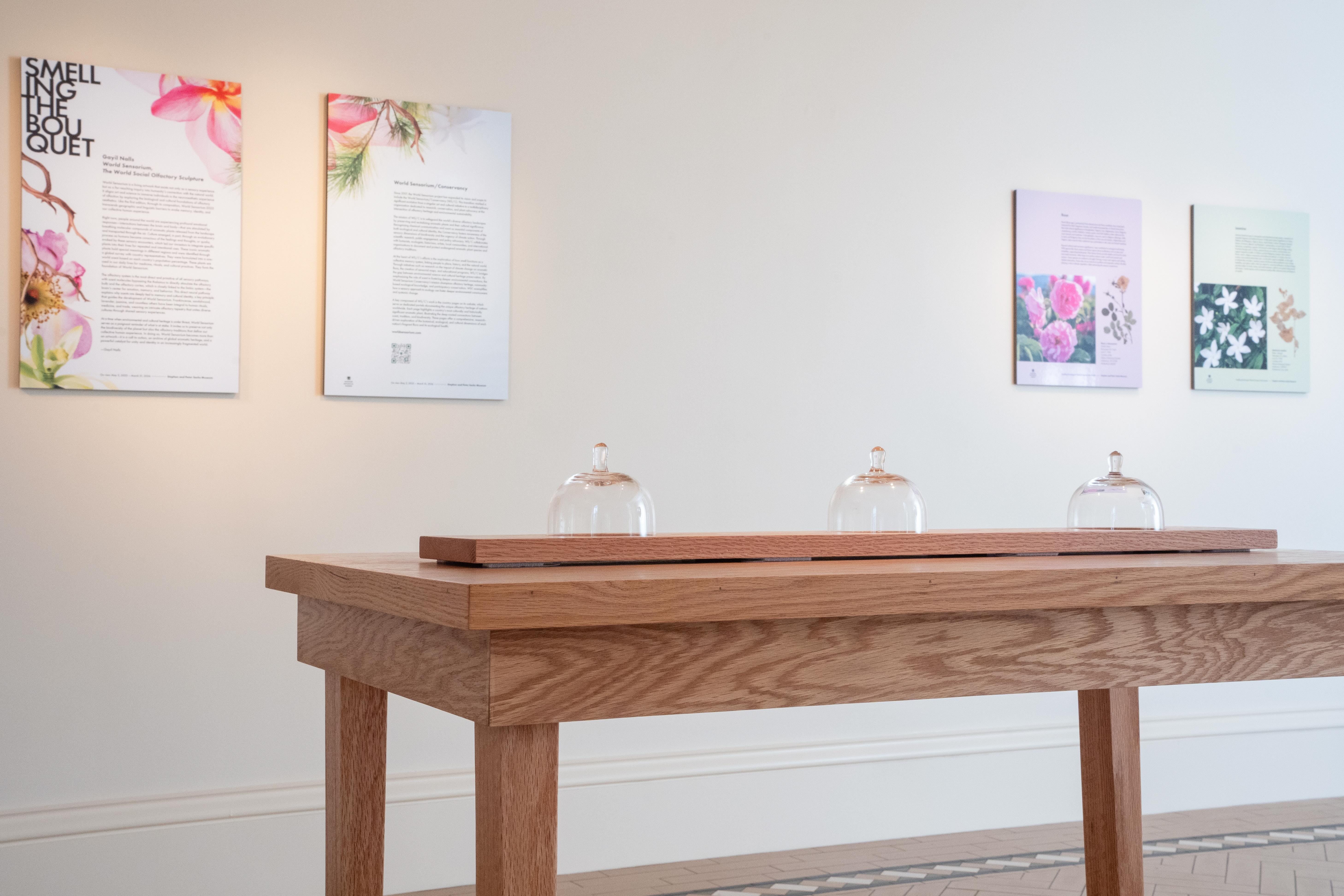
F: The exhibit also features Gayil Nalls’ botanical scent artwork World Sensorium. How does her artwork change or deepen how people think about botanical scents?
N: The 2025 edition of World Sensorium, which I commissioned Gayil to create for the exhibition, features aromatic plants from 195 countries. Visitors are often left speechless by the sheer scope and diversity it represents, showcasing the global importance of aromatic plants. I think they are also very taken with the actual scent of the piece; it’s floral and woody and sweet in a way that is so complex, that they can almost sense the multitude of plants included.
F: What do you hope visitors feel, or notice differently, after going through the exhibit? What impressions do you hope people leave with?
N: I hope visitors leave the exhibition truly impacted by the scents! At a basic level, I want them to appreciate the role of scent in their lives and pay more attention to the smells around them. I hope that visitors start appreciating the varied scents that are out there to experience, and not be so concerned about whether or not the smells are “good” or “bad” - or even whether or not they like them - but in fact I hope that they just want to exercise their sniffers as often as they can and then want to learn more about olfaction. For me, scent is such an important sense, and I derive much meaning and joy from the scents I experience - regardless of whether or not they are pleasant to me - that I would like to see more of that dialogue out in the world.
F: Lastly, how might someone transform a simple walk through their local botanical or community garden into a more sensory experience with plants, drawing on what this exhibit reveals about scent?
N: I’m always thinking of ways I can add scent into my daily experiences, especially now that I have curated this exhibition. One simple approach is interacting with plants you already enjoy - rosemary is a favorite of mine. I brush it with my hands whenever I pass by, letting its powerful aroma linger on my skin and in the air. Of course, it’s important to stick to plants you know well (there are some prickly and allergenic plants out there!), but herbs like oregano, marjoram, lavender, and sage are great for this. Even on neighborhood walks, I take the time to smell flowers along the sidewalk - like irises, hostas, and others - which may not hit like a rose, but their scent is unique nonetheless, and I enjoy adding more smells to my olfactory memory when I can.
Nezka Pfeifer is an interdisciplinary museum curator who develops botanically-themed exhibitions at the Stephen and Peter Sachs Museum at the Missouri Botanical Garden in St. Louis, a world-renowned research and horticultural organization. She focuses on projects where botany, culture, and art are intertwined through exhibition narratives and multicultural experiences.
This week on my podcast An Aromatic Life:
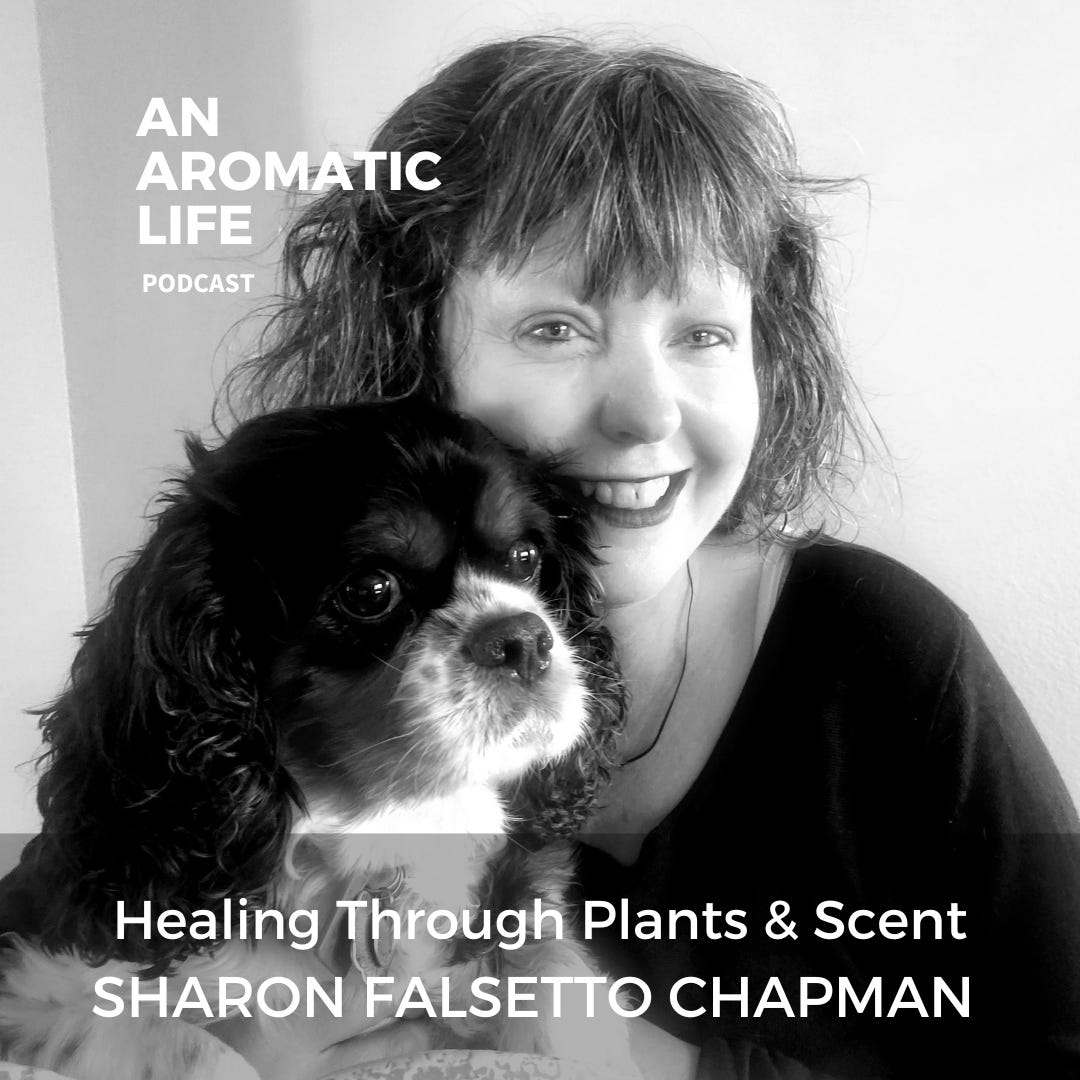
In this week’s episode, I sit down with aromatherapist, herbalist, and botanical perfumer Sharon Falsetto Chapman to explore how plants and scent can be powerful partners in healing and self-discovery.
Sharon shares her deeply personal journey, from leaving an abusive marriage and facing chronic illness, to rebuilding her life through gardening, aromatherapy, and the art of natural perfumery.
She reflects on how tending to plants and creating with scent helped her reconnect to nature, emotion, and creativity after years of suppression. We discuss how connecting with plants can ground and heal us through difficult transitions, the importance of building a healing relationship with plants instead of simply using them, what perfumery has taught Sharon most, and how scent can express who we are and help us grow into who we want to be.
Sharon also introduces her new line of botanical perfumes inspired by classic Hollywood women like Audrey Hepburn and Louise Brooks.
This episode is a gentle reminder that healing can begin with something as simple as a single potted plant, a walk through a garden, or the scent that brings you back to yourself.
You can listen to this episode and many more on Apple podcast, Spotify, Amazon Music, or wherever you get your podcasts.